
How to Plan the Layout for Your Pool Fence
Planning your pool fence layout is one of the first steps when preparing for a pool fence installation. Most homeowners begin planning their layout before ordering materials or while getting estimates from a local installer.
Taking time to think through your fence layout will help you:
- determine how much fencing you need
- decide where the gate should go
- make installation easier
- create a clean and functional pool area
Whether you’re installing the fence yourself or working with a professional installer, understanding the basics of pool fence layout will help you make better decisions for your yard.
Start by Planning Your Pool Fence Layout
Before ordering your fence or scheduling installation, take time to look at how the fence will fit within your yard.
Think about:
- where people normally enter the pool area
- how much space you want around the pool
- where the fence will start and end
- any obstacles that may affect the layout
- Avoid dividing the yard unnecessarily
Keep your layout clean with as few turns or sections as possible. Many homeowners mark their layout using chalk, rope, or a garden hose so they can visualize how the fence will run before installation. Identify any areas that could allow access to the pool, such as:
- Doors leading from the house
- Low windows
- Doggy doors
- Side gates or garage entries
Concrete is best for tensioned mesh fencing. While it’s tempting to avoid drilling into your deck, dirt or grass installations are typically:
- Less secure
- More likely to shift
- Harder to maintain
Planning a DIY Pool Fence Installation?
If you’re planning to install the fence yourself, our DIY Pool Fence Guide walks through the full process, including tools, installation steps, and product options.
Estimate How Much Fence You Need
Once you have a general idea of your fence layout, the next step is estimating how much fencing your project will require.
All-Safe removable pool fence sections come pre-assembled in 15-foot sections, with poles spaced 36 inches apart.
|——15 ft——|——15 ft——| Gate |——15 ft——|
Simple way to estimate your fence length
- Walk the path where you plan to install the fence.
- Measure the total distance of that layout around your pool area.
- If you plan to install a gate, subtract about 3 feet for the gate opening.
- Divide the remaining distance by 15 feet to estimate how many fence sections you may need.
Example
If your layout measures 90 feet and you plan to install one gate:
90 feet − 3 feet (gate opening) = 87 feet
87 feet ÷ 15 feet per section ≈ 6 fence sections
Your final section is often trimmed to fit during installation so the fence ends cleanly at a wall, post, or termination point.
Most installations include one self-closing, self-latching gate, although larger yards or multiple entry points may include additional gates.
Leave Enough Space Around the Pool
When deciding where your fence should go, make sure there is enough room between the pool and the fence to move comfortably around the pool area.
ASTM guidelines recommend installing the fence at least 20 inches from the water’s edge. However, many homeowners choose 24–36 inches or more if space allows.
Leaving additional space inside the fenced area allows you to:
- Walk comfortably around the pool
- Perform cleaning and maintenance
- Avoid the fence feeling cramped around the pool
If the fence is installed too close to the water’s edge, it can become an obstacle when exiting the pool.
Choose the Best Location for Your Gate
Every pool fence installation should include at least one self-closing, self-latching gate.
Most installations use one primary gated entry point, placed where people naturally enter the pool area. This is often near:
- pool steps
- a patio seating area
- a walkway leading to the pool
If your yard is large or your pool area has multiple access points, you may choose to install additional gates. Multiple gates can make it easier to enter the pool area from different parts of your yard.
However, even if you add additional access points, you should always make sure one main gate is located where you normally enter the pool area.
When planning your gate placement, choose a location with enough open space so the gate can swing freely and people can enter the pool area safely.
Your gate is the most used part of the fence. To function properly, it should:
- Be installed in a straight line
- Be drilled in concrete or other hardscape
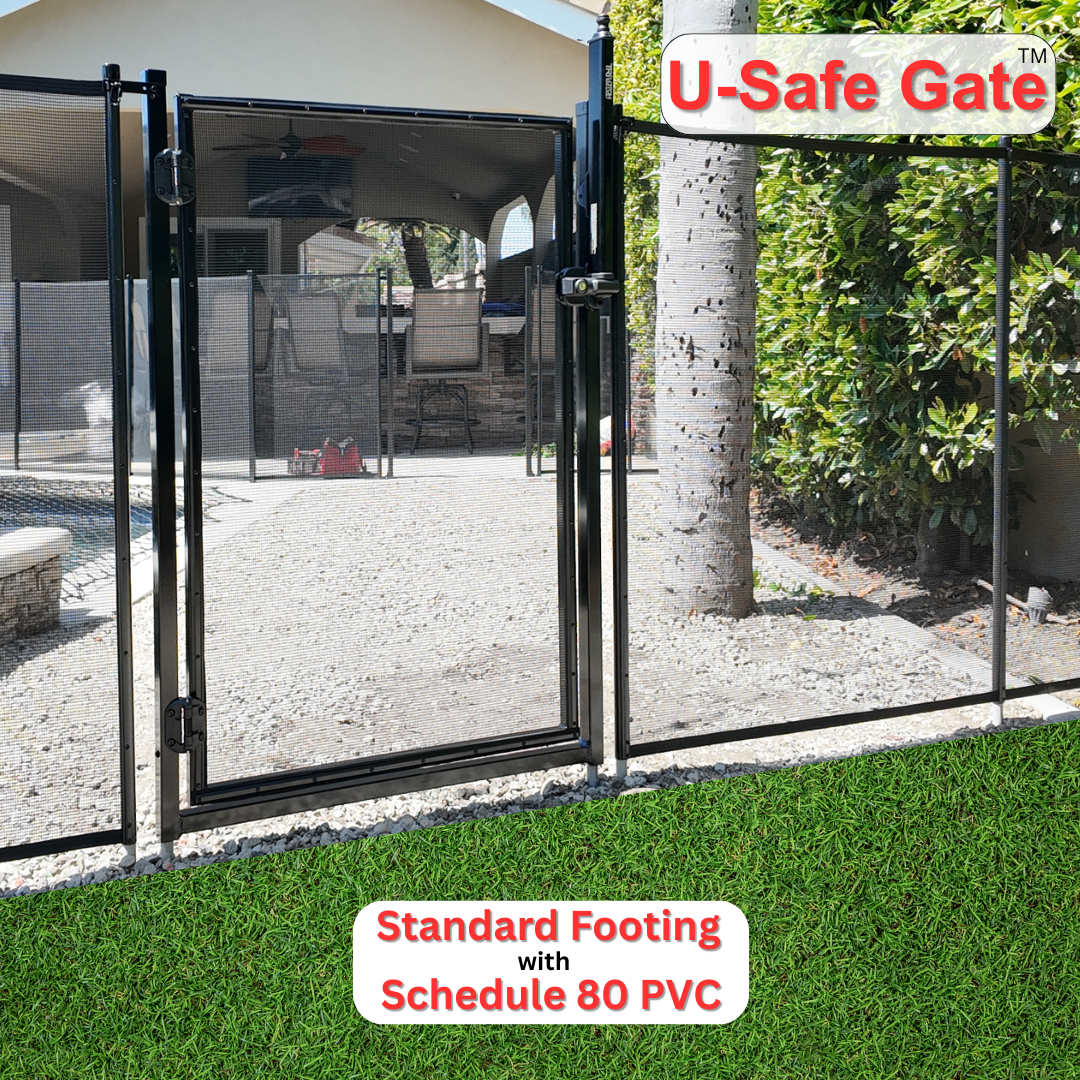
If installing a gate in dirt, grass, or turf, a gate pad is required to provide proper support. As an alternative, the U-Safe Gate Kit is designed for these surfaces and requires only two concrete footings rather than a full gate pad.

Pro Tip: Choosing a Fence Color
Fence color can impact both the appearance and visibility of your pool fence.
Dark mesh fencing is the most popular option because it visually disappears when viewed from a distance, providing the clearest sightline to the pool.
Lighter fence colors can look great when matched with your patio, deck, or landscaping. However, lighter mesh reflects more light, which can make the fence slightly more visible and less transparent compared to darker colors.
When choosing a color, consider both the style of your yard and how important visibility to the pool area is for you.
Straight Fence Runs Are the Easiest
When designing your layout, straight fence runs are usually the easiest option.
Running the fence in a straight line from one wall, yard fence, or termination point to another:
- simplifies installation
- helps maintain proper fence tension
- creates a clean, professional look
Many homeowners install the fence in a straight line across their yard, creating a protected pool area while leaving the rest of the yard open.

Minimize Elevation Changes and Sharp Turns
When planning your fence layout, try to keep the fence path as simple as possible.
Avoid unnecessary direction changes, tight curves, or sudden elevation changes unless your yard layout requires them.
Simpler fence lines are usually easier to install and help the fence maintain proper tension.
A cleaner layout can also improve the overall appearance of the fence around your pool area.
When possible:
- keep fence runs relatively straight
- avoid zig-zag patterns around small obstacles
- limit sharp corners or frequent turns
- avoid placing the fence across steps or large elevation changes
If your pool or yard requires turns or curves, removable mesh pool fencing can accommodate them. However, reducing unnecessary direction changes will usually make the installation process easier and produce a cleaner finished result.
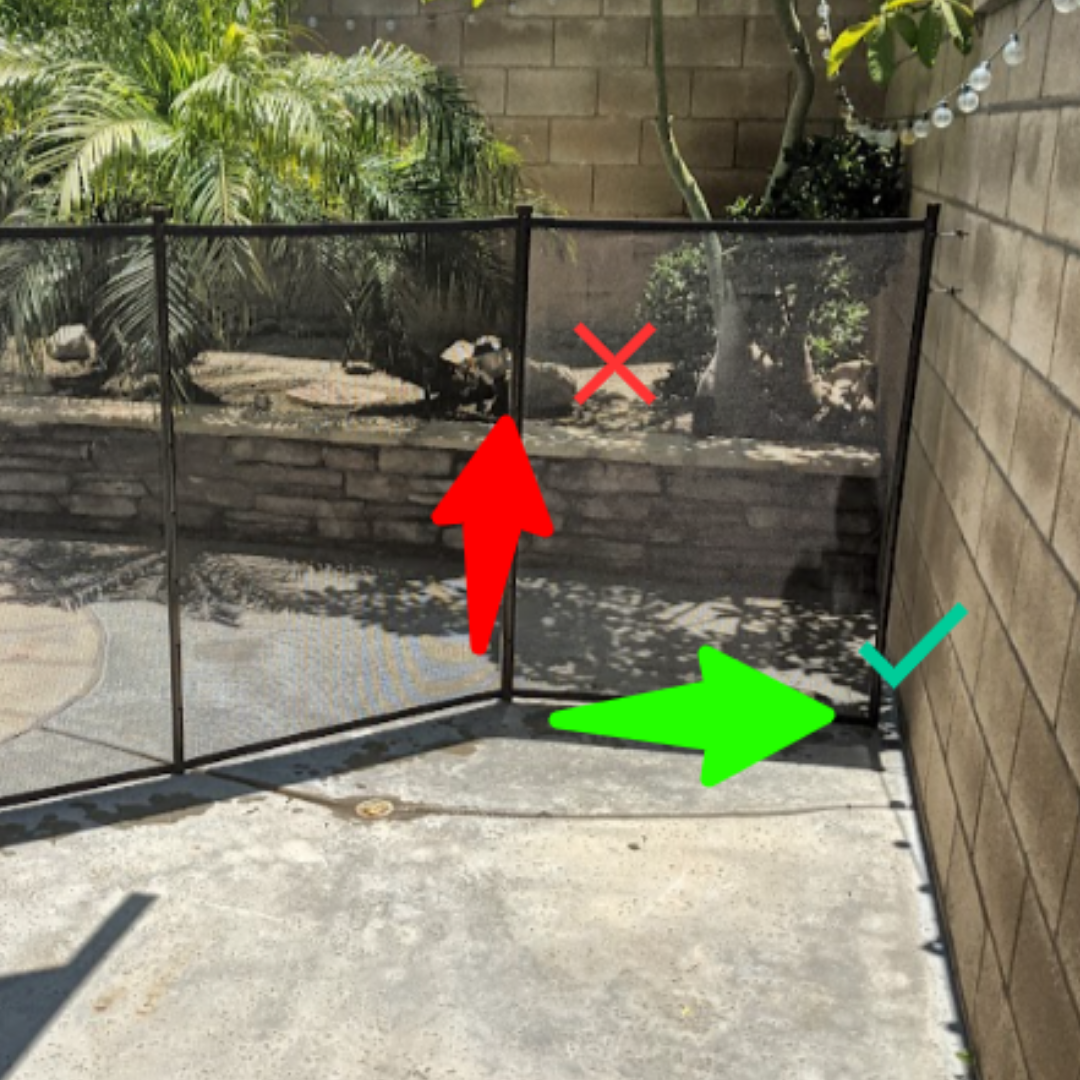
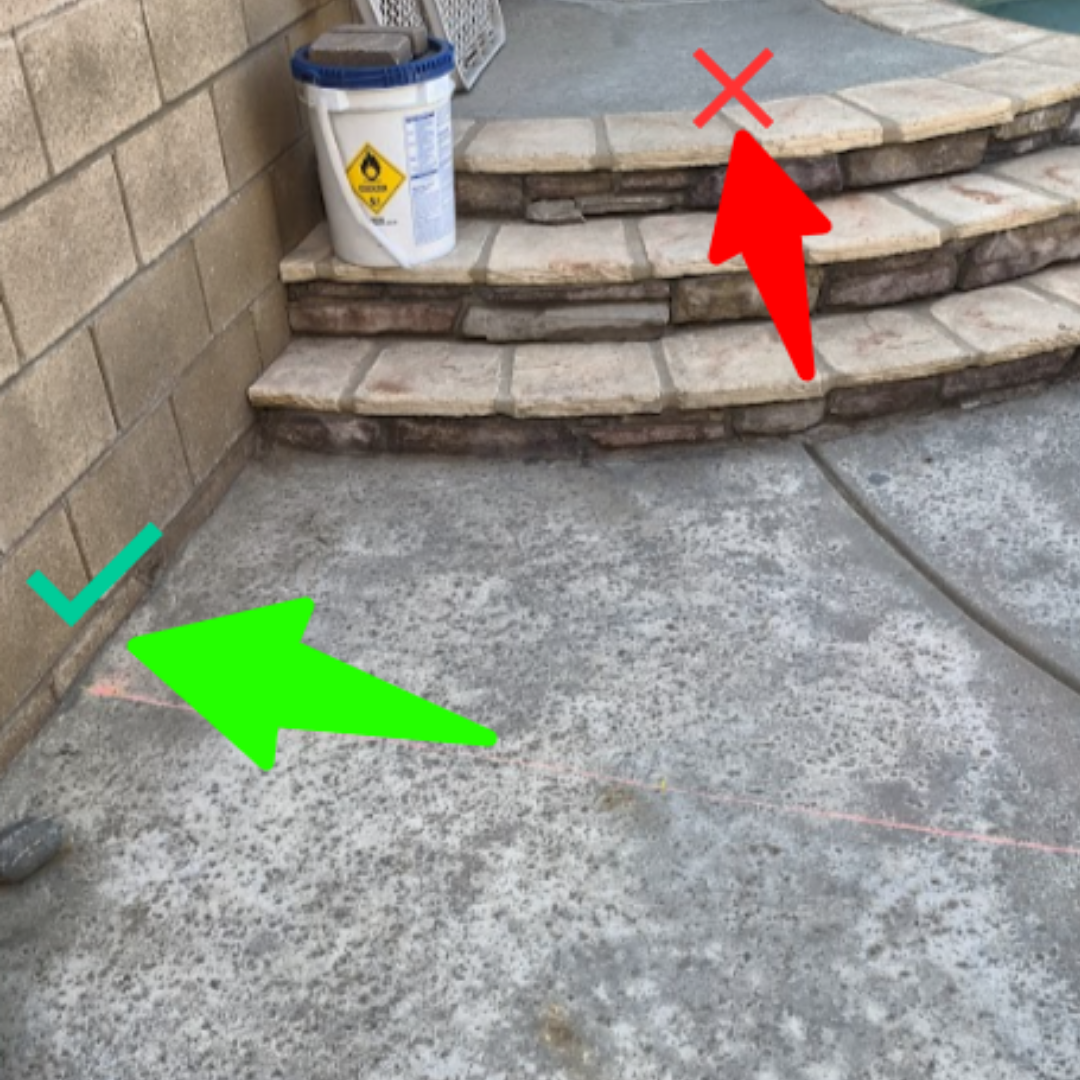
Curved Pools and Soft Turns
Pools are often curved, kidney-shaped, or freeform, and your fence can easily adapt to those shapes.
However, the fence does not need to follow every curve of the pool exactly.
In many installations, it is better to run the fence in gentle straight sections between curves rather than trying to match every contour of the pool.
This approach:
- makes installation easier
- keeps the fence looking clean and organized
- avoids unnecessary zig-zag patterns
- avoids pulling the fence tension in multiple directions, which can create awkward fence lines

Common Layout Styles
There are several common layout styles used in DIY pool fence installations.
Straight Yard Layout
The fence runs in a straight line across the yard from one side to the other.

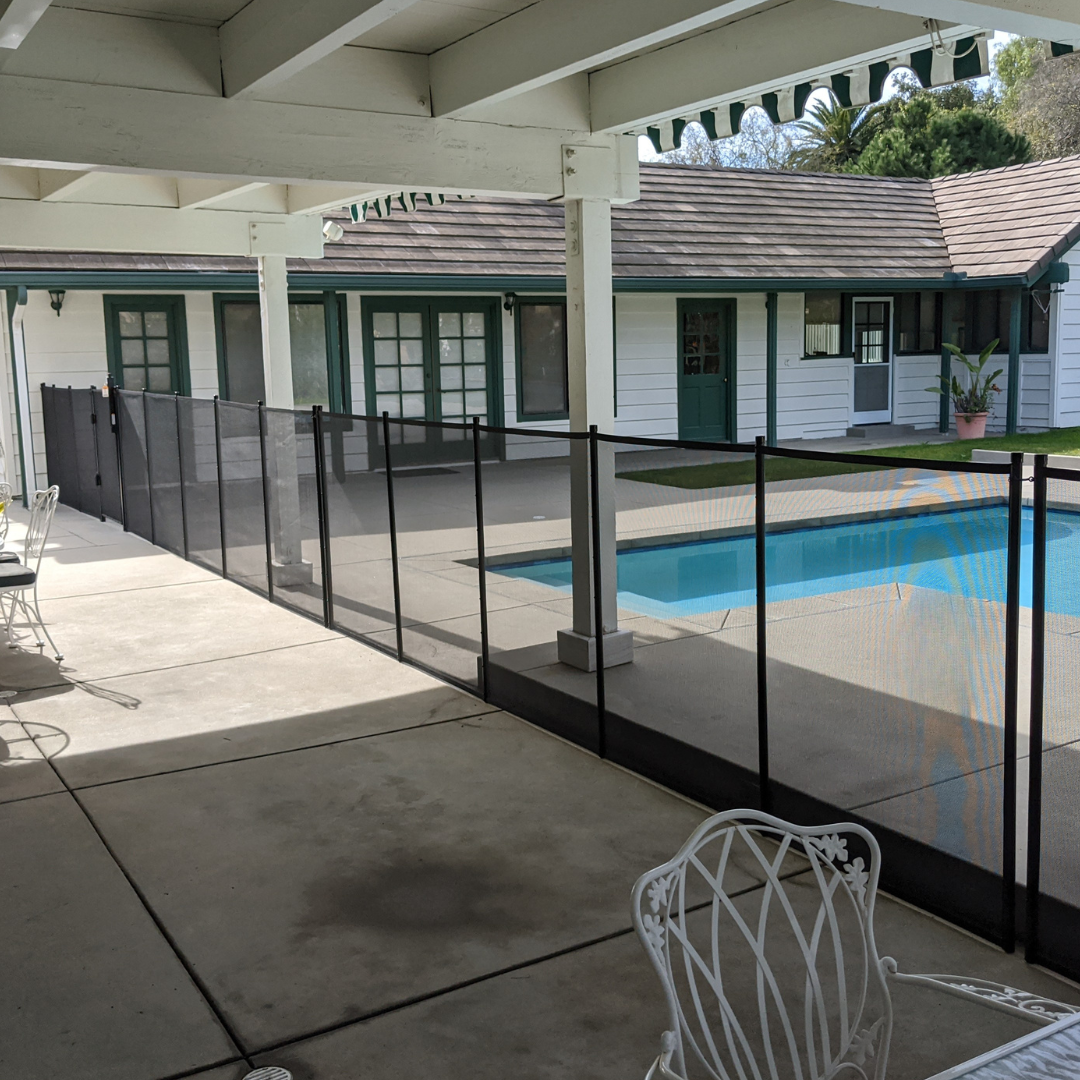
Full Pool Perimeter
The fence follows the general shape of the pool and surrounds the entire pool area.
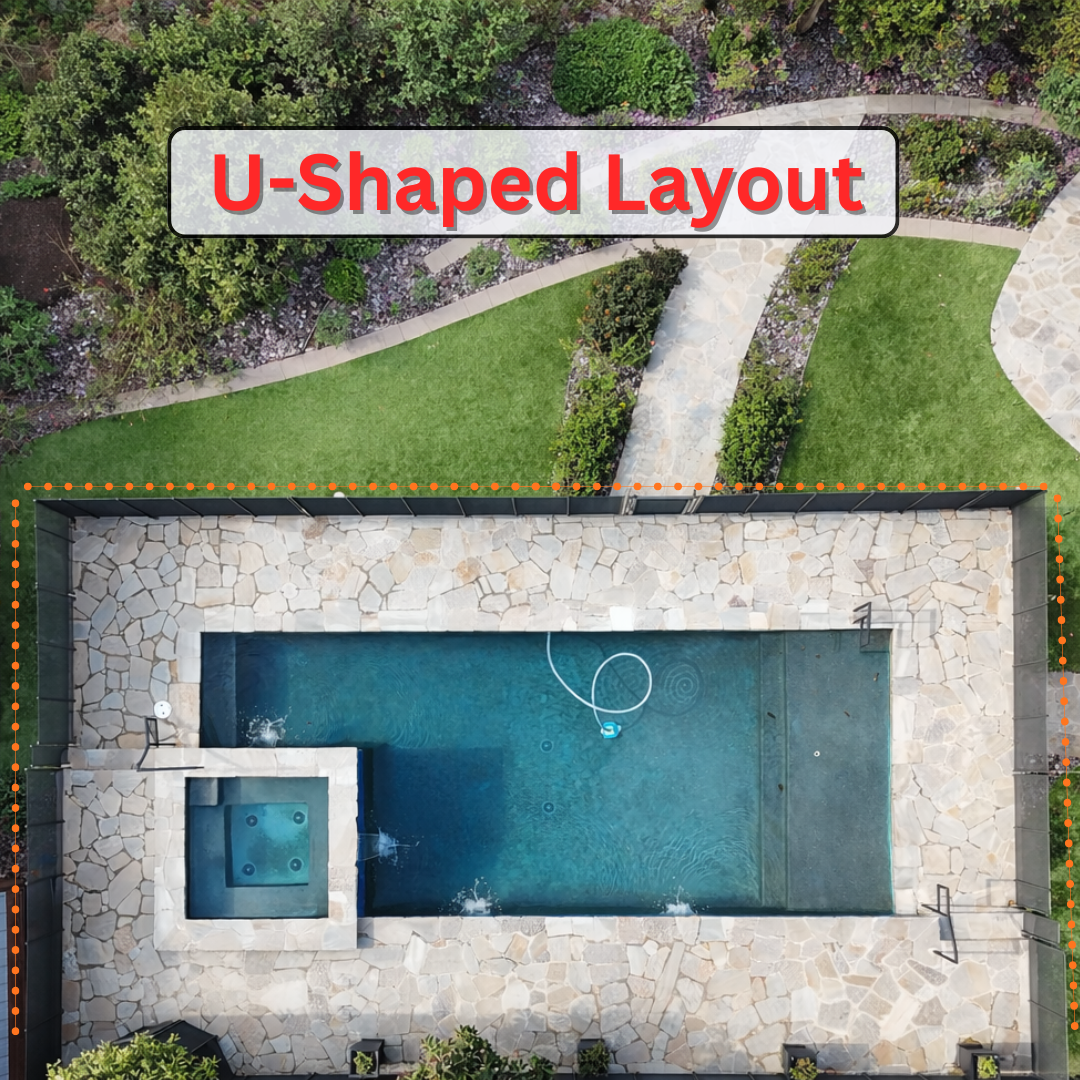
U-Shaped Layout
One side of the yard fence or house wall is used as part of the barrier, with the pool fence forming a “U” shape.
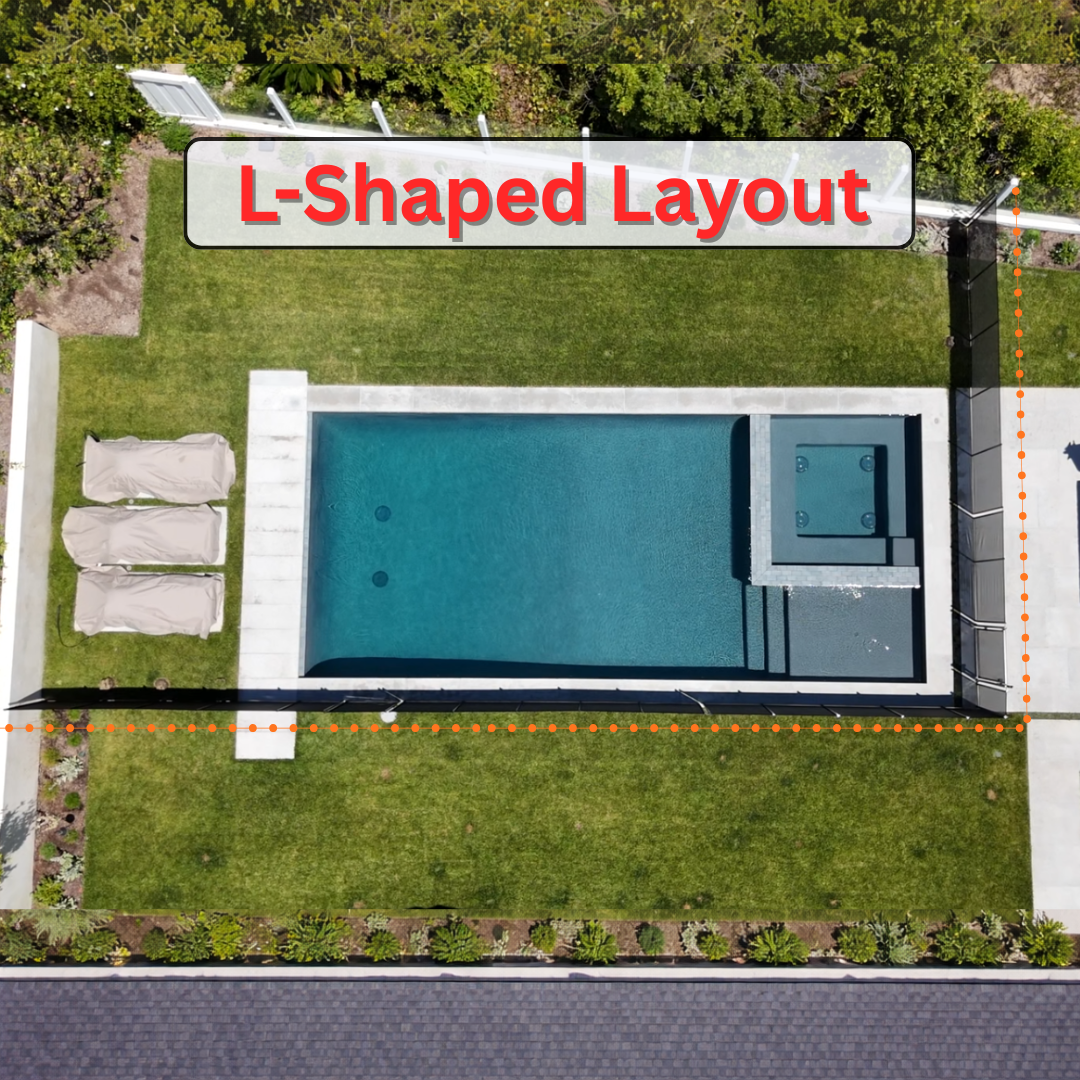
L-Shaped Layout
The fence connects between existing structures like a wall or property fence to create a protected pool area.
Choosing the right layout depends on your yard design, available space, and how you typically use your outdoor area.
Consider Obstacles Around the Pool
While planning your layout, take note of anything that may affect where the fence can go.
Common obstacles include:
- stairs or raised deck areas
- planters or landscaping features
- outdoor furniture
- property fences or walls
You should also avoid placing climbable structures near the fence. Items like benches, large planters, or storage boxes could allow a child to climb over the barrier.
Avoid Dangerous Gaps in the Fence Layout
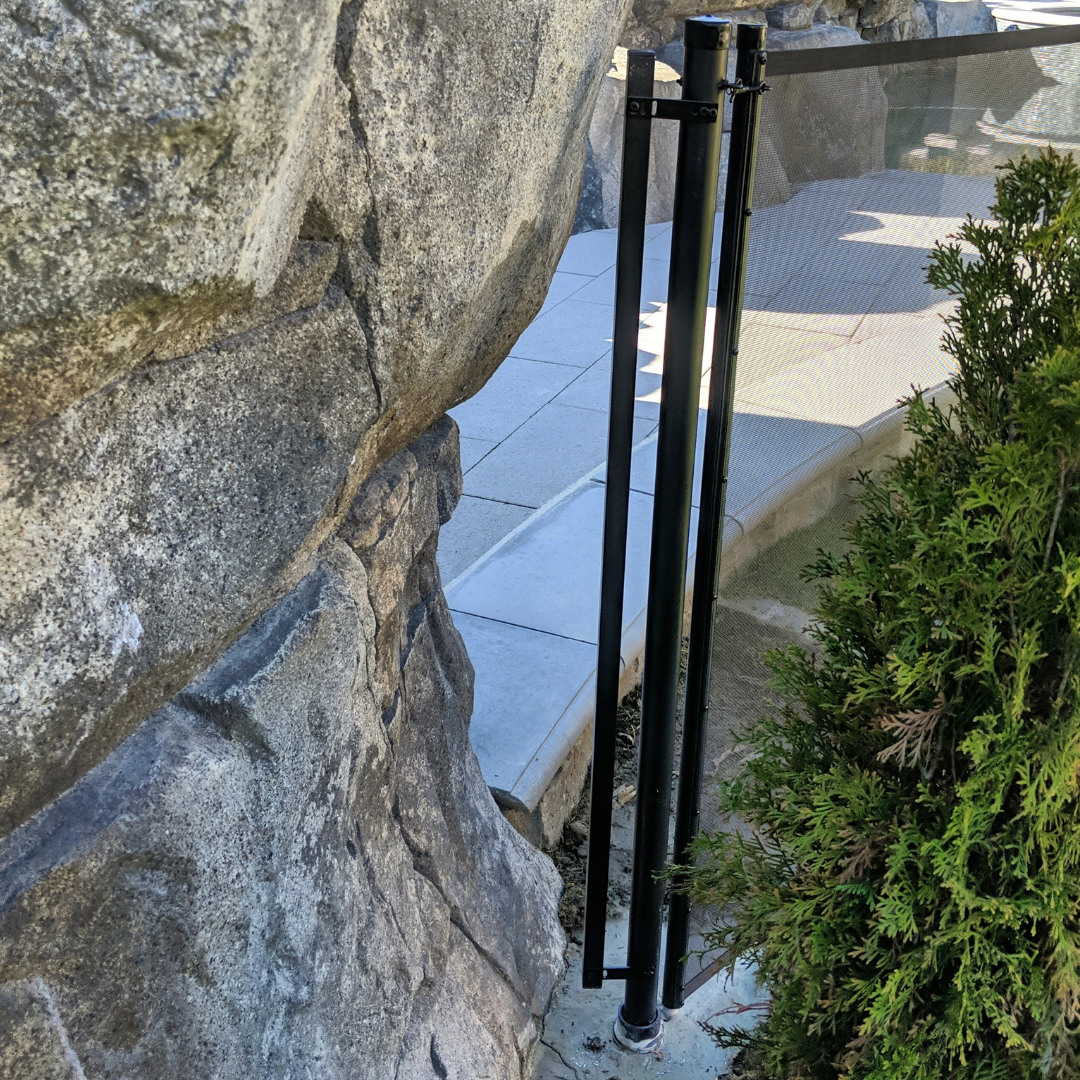
When planning your fence layout, make sure the barrier does not leave openings that could allow a child to pass through or underneath.
General pool safety guidelines include:
- Openings between vertical fence elements should be less than 4 inches
- The space between the bottom of the fence and the ground should be no more than 1 inch
- The fence should connect securely to walls, posts, or other termination points without leaving gaps
Always check your local building codes, as requirements can vary by location.

Plan Before You Drill
Before beginning installation, walk your layout one final time and confirm:
- The fence has enough space around the pool
- The gate is placed in the best location
- The fence runs smoothly without sharp angles
- Obstacles have been avoided
Taking the time to plan your layout carefully will make the installation process much easier and will result in a better-looking finished fence.
Use the Pool Fence Calculator
For a more accurate estimate based on your layout, use our DIY Pool Fence Calculator, which helps determine:
- number of fence sections needed
- gate placement
- approximate project size
Use the DIY Pool Fence Calculator
Pro Tip
Measure carefully, sketch out your layout before drilling, and use a tape or chalk line to visualize the placement. Whether you’re doing it yourself or working with a pro, the better the plan, the better the result.
Ready to Measure & Calculate Your Pool Fence Materials?
Once you have planned your pool fence layout and determined where your fence will start, stop, turn, and allow for entry access, the next step is calculating the materials needed for your installation.
Read our complete DIY Pool Fence Materials & Calculation Guide to learn how to:
- measure total fence length
- calculate fence sections
- determine gate quantities
- plan for turns and wall connections
- identify additional materials and installation requirements
Read the DIY Pool Fence Materials & Calculation Guide
Ready to Order Your DIY Pool Fence?
Once you have completed your measurements and material calculations, you can shop our complete selection of removable mesh pool fence products, gate kits, accessories, and installation components online.
Ready to Install Your Pool Fence?
Once you’ve planned your layout, confirmed your fence measurements, and ordered materials, the next step is installation.
Our step-by-step installation quick guides walk you through the full process, including:
- marking your layout
- drilling anchor holes
- installing fence sections
- installing the self-closing safety gate
- terminating the fence at walls or posts
Choose the guide that matches your gate type:
Installation Quick Guides
- Rectangular Post Gate System
- Double Pole Gate Post System
- U-Safe Pool Gate System
View the Pool Fence Installation Guides
These guides are the same instructions used by professional installers and are designed to help homeowners successfully install their own removable pool fence.
Still Have Questions?
We’re here to help!
If you need help finalizing your layout or aren’t sure where to start:
Use our chat feature to talk to our team for expert guidance on installing your own pool fence
Or contact your local installer for professional installation options
Your pool fence layout is an important decision—don’t hesitate to ask for help.