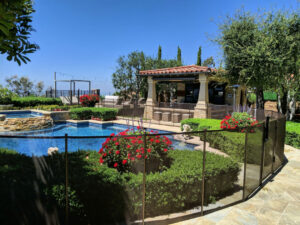
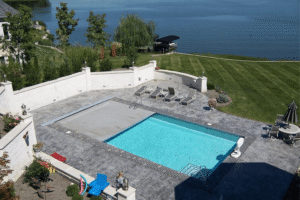
A backyard pool can make your short‑term rental stand out in search results and command higher nightly rates. It is also one of the biggest sources of risk for hosts, because every new booking brings guests who may not understand the pool, the yard layout, or the safety expectations.
For hosts, pool safety is not just about avoiding bad reviews, it is about protecting guests, managing liability, and meeting local requirements that often apply specifically to vacation rentals. The good news is that with thoughtful planning around barriers, rules, and basic safety checks, you can significantly reduce risk while still giving guests a great experience.
Why Pools at Short‑Term Rentals Need Extra Attention
At a typical home, the same family uses the pool every day. At a short‑term rental, every group is new, with different ages, swimming abilities, and attitudes toward risk. They may arrive excited, tired from travel, or distracted by check‑in logistics, and that is exactly when accidents are more likely to happen.
Short‑term rentals with pools face unique challenges:
Guests do not know the space. They may not realize how close doors are to the pool, where the shallow areas are, or how deep the water becomes.
Children and pets are in an unfamiliar environment. New surroundings can mean new temptations, including an unfenced pool or gate left open by another guest.
Hosts are not on‑site. You cannot personally supervise every group, so you rely on physical barriers, clear communication, and simple systems.
That is why pool-specific planning is essential before turning a home with a pool into a short‑term rental.
Make a Four‑Sided Pool Fence Your Baseline
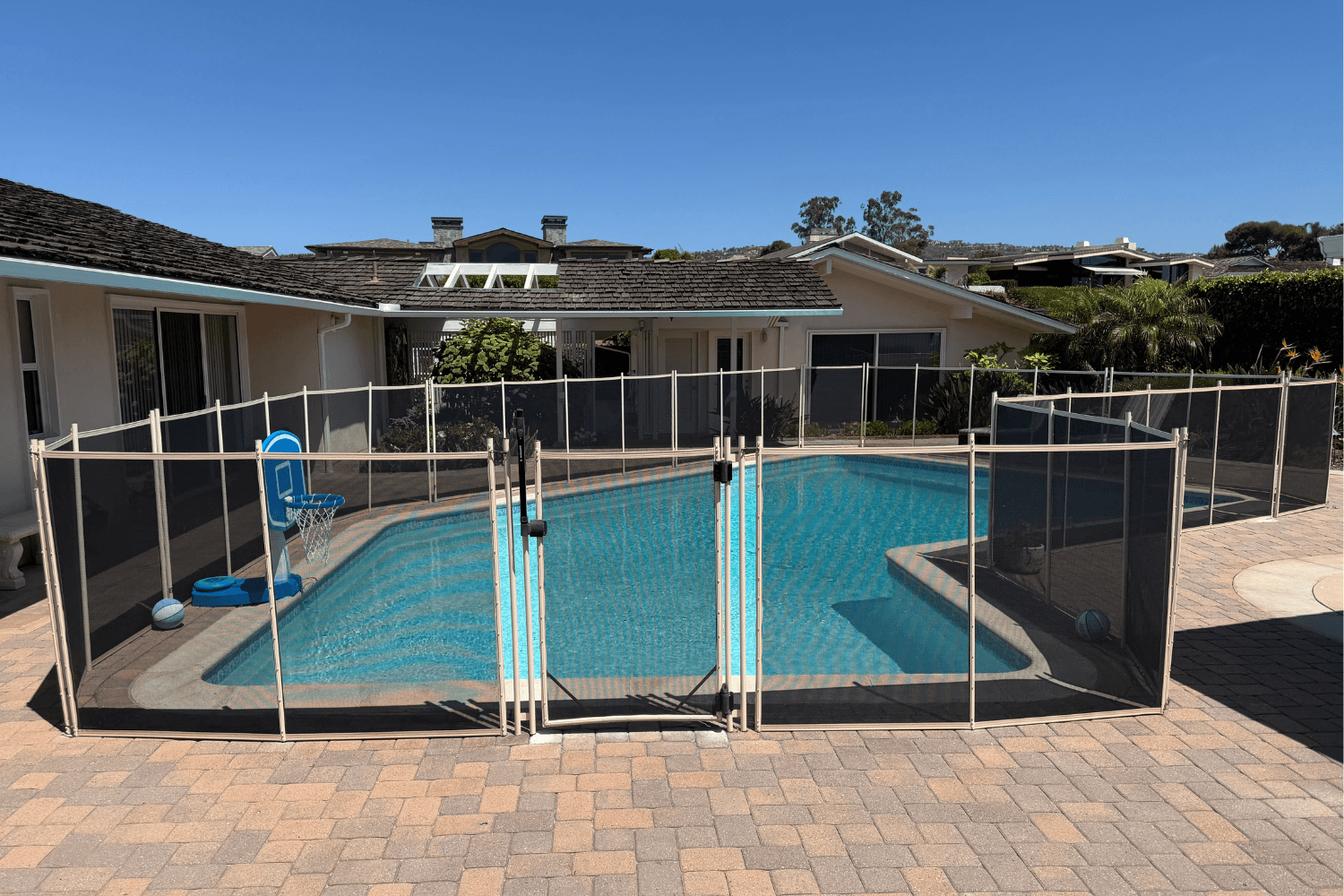
It’s important to emphasize that a four‑sided fence that separates the pool from the house and yard is one of the single most effective tools for reducing drowning risk. For hosts, it also creates a clear, visible standard: when the gate is closed and latched, the pool area is off‑limits unless an adult chooses to open it.
When planning your setup, aim for:
A dedicated pool fence that fully encloses the water, rather than relying on the back of the house or yard perimeter as one “side” of the barrier.
A design that avoids footholds or climbable surfaces on the outside, including furniture, low walls, or planters that sit too close to the fence line.
Removable mesh pool fencing is particularly well‑suited to short‑term rentals because it creates a strong, code‑conscious barrier while preserving visibility for supervising adults. Hosts can maintain the fence as a default, closed position between bookings and during stays unless an adult intentionally opens the gate.
Consider How Guests Actually Move Through the Property
For a short‑term rental, safety is not just about having a fence, it is about how guests interact with doors, paths, and outdoor spaces the moment they arrive.
When you walk the property with “fresh eyes,” look for:
Direct paths from entry doors to the pool. If a slider or back door opens straight to water with no barrier, that is a red flag, especially for families with small children.
High‑traffic zones where guests will naturally gather (patio seating, grill area, fire pit) and how close those are to the pool edge or gate.
Guest confusion points, like multiple doors opening to the backyard, where it may not be obvious which one leads directly to the pool.
Ideally, guests should enter the pool area through a clearly defined gate in the fence rather than stepping directly from the home into open water. If that is not currently the case, adding or reconfiguring a removable fence can help create a controlled entry point that works better for hosting.
Set Clear Pool Rules for Guests In Writing
Even with a good fence, guests need unambiguous expectations about how and when they can use the pool. Pool safety guidance for hosts and insurance resources consistently recommend documented rules and safety information for every stay.
Effective host rules often cover:
Supervision requirements. For example, stating that children must be actively supervised by an adult at all times in or near the pool.
Gate behavior. Making it clear the pool gate should remain closed and latched when the pool is not actively in use, and that guests should not block it open with objects.
Hours and noise. Setting reasonable pool hours (such as daytime and early evening) to manage both safety and neighborhood relations.
No diving and shallow‑water rules. Especially important if your pool is not designed for diving or has shallow sections.
Glass and alcohol around the pool. Encouraging non‑glass containers and reminding guests that alcohol can impair judgment near water.
These rules should appear in multiple places: the listing description where appropriate, the house manual or welcome book, digital messages sent pre‑arrival, and ideally a concise rule sign posted near the pool area.
Build Simple Safety Checks Into Your Turnover Routine
A short‑term rental pool does not just need to be clean; it needs to be ready and safe for the next group. Safety‑focused host guides recommend making pool checks part of your standard turnover, just like linens and cleaning.
At minimum, each turnover should confirm:
The pool fence and gate are intact and undamaged, with no loose posts, missing caps, or bent sections.
The gate self‑closes and latches consistently from several positions without help.
Any posted rules or emergency information at the pool are readable and still firmly mounted.
Rescue equipment, if provided, is visible and in the right place (such as a reaching pole, ring buoy, or life hook).
If you use a pool service, it can help to align their visit schedule with your booking pattern so that water chemistry and mechanical issues are handled promptly and do not interfere with safety or guest satisfaction.
Think Through Children, Pets, and Non‑Swimmers
Short‑term rental bookings may include extended families, visiting friends, or groups where not everyone is a confident swimmer. Some may also travel with children or pets, even if your listing is not explicitly focused on families.
To support these guests safely:
Make your barrier setup clear in your listing photos and description so families understand there is a fence and gate.
Encourage guests to bring or use Coast Guard–approved life jackets for young or inexperienced swimmers.
If you allow pets, remind guests that animals should not be left unattended in the yard and that the pool area is not a pet play zone.
Your goal is not to replace parental responsibility, but to give guests the information and infrastructure they need to make safer decisions while staying at your property.
Coordinate Safety With Your Insurance and Local Rules
Beyond protecting guests, a well‑thought‑out pool safety plan can help protect you as a host from liability and coverage gaps. Many short‑term rental safety and insurance guides stress that standard homeowners policies may not fully cover incidents at a rental pool, especially if local barrier laws were not followed.
Consider:
Reviewing local pool barrier requirements, including any rules specific to rental properties or accessory dwelling units in your city or state.
Talking with your insurance provider about short‑term rental coverage and any pool-related conditions they expect you to meet.
Keeping a simple log of major safety improvements or inspections, such as fence installations, gate hardware upgrades, or compliance checks.
This kind of documentation is not meant to be intimidating. It is a way to show that you are a proactive, responsible host who takes water safety seriously.
Use Layers of Safety That Make Sense for Hosting
For short‑term rentals, a strong physical barrier is the foundation, but thoughtfully chosen additional layers can provide extra reassurance when you cannot be there in person.
Depending on your property and budget, you might consider:
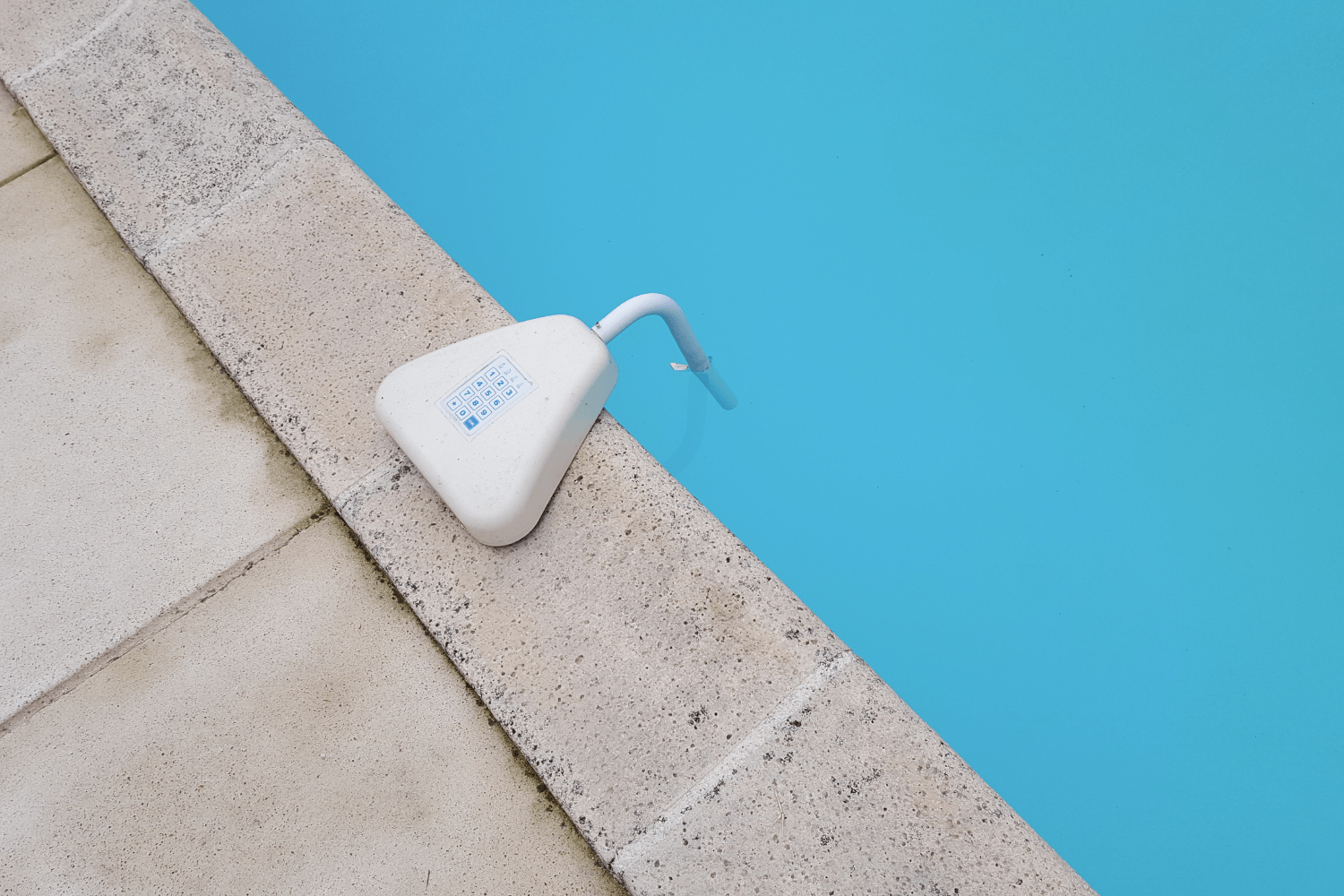
Door and gate alarms that alert guests when someone opens a pool‑side door or gate unexpectedly.
A safety cover for periods when the property is unoccupied or during offseason, which can provide both protection and debris control.
Good lighting around the pool and gate, so guests can see hazards clearly at night and are less likely to trip or misjudge depth.
These measures should be framed for guests as helpful features, not obstacles; another reason to mention them positively in your listing materials.
Turn Your Pool From a Risk Into a Selling Point
A pool can be a highlight of your listing and a major driver of bookings, if guests feel confident that it is safe and straightforward to use. By investing in a well‑planned pool fence, placing the gate where it makes sense for your layout, setting clear rules, and building basic safety checks into your turnover routine, you can turn a potential liability into a strong amenity.
If you are preparing a short‑term rental or updating an existing listing, browse All-Safe®’s pool safety equipment to explore removable mesh pool fencing, safety covers, and other barrier options that work well for hosting environments. You can also schedule an estimate from a local installer to review your specific property and get recommendations tailored to your layout and local requirements. And if you are comfortable tackling certain updates yourself, All‑Safe’s online parts catalog makes it easy to order fence components and accessories to strengthen your pool safety setup before guests arrive.
A sliding deck pool cover does more than protect the water. When closed, it can conceal the pool and turn its footprint into usable outdoor space for relaxing, entertaining, and everyday backyard living. Learn whether this custom solution may be right for your pool project.
A winter cover protects the water, but a pool fence controls access to the entire pool area. Learn why removable mesh fencing can still play an important role after your pool is closed, and when seasonal removal may make sense.
“Covered” can mean very different things for your pool and backyard. Learn how safety nets, leaf covers, winter safety covers, automatic covers, and sliding deck systems affect access, safety, maintenance, and how you can use the space around, and above, your pool.