How to Plan a Layered Pool Safety System That Works with Real Life (Not Just the Rulebook)
Most pool owners know they need a fence and a few basic rules. Many already meet local code and have passed inspection at least once. But there is a big gap between “meets the rulebook” and “still protects your family on a chaotic Tuesday evening when everyone is tired, distracted, and in and out of the house.”
A layered pool safety system is about designing protection that works on those messy days, not just the ideal ones. It starts with a strong fence, then adds other physical and behavioral layers in the places where that fence is most likely to be stressed or bypassed. Let’s walk through how to plan those layers around your real routines, not just abstract guidelines.
“Meets Code” Is the Floor, Not the Ceiling
Barrier laws and safety guidelines exist for good reasons, but they cannot see into your daily life. They do not know when you host friends, how often you work from the patio, whether grandparents or sitters are frequently in charge, or how many doors open toward the pool.
Think of the rules as a minimum baseline: height, latch type, gap sizes, and basic gate behavior. From there, it is up to you to ask a tougher question: “On our busiest, most distracted days, does this setup still hold up?” That is where layering comes in; each added layer is there to catch a specific kind of “bad day” or failure, not just to check another box.
Start with the Fence: Your “Always On” Layer
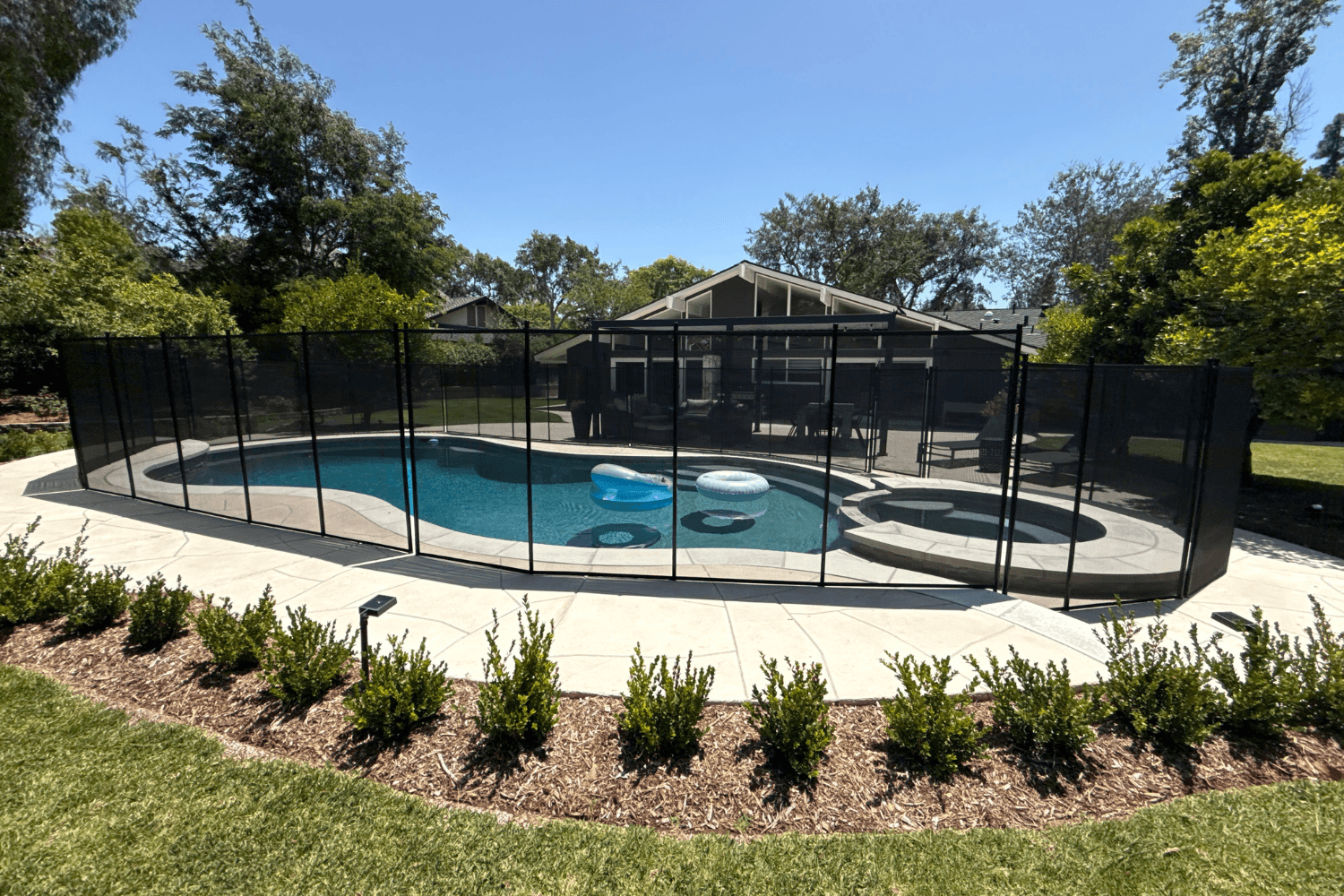
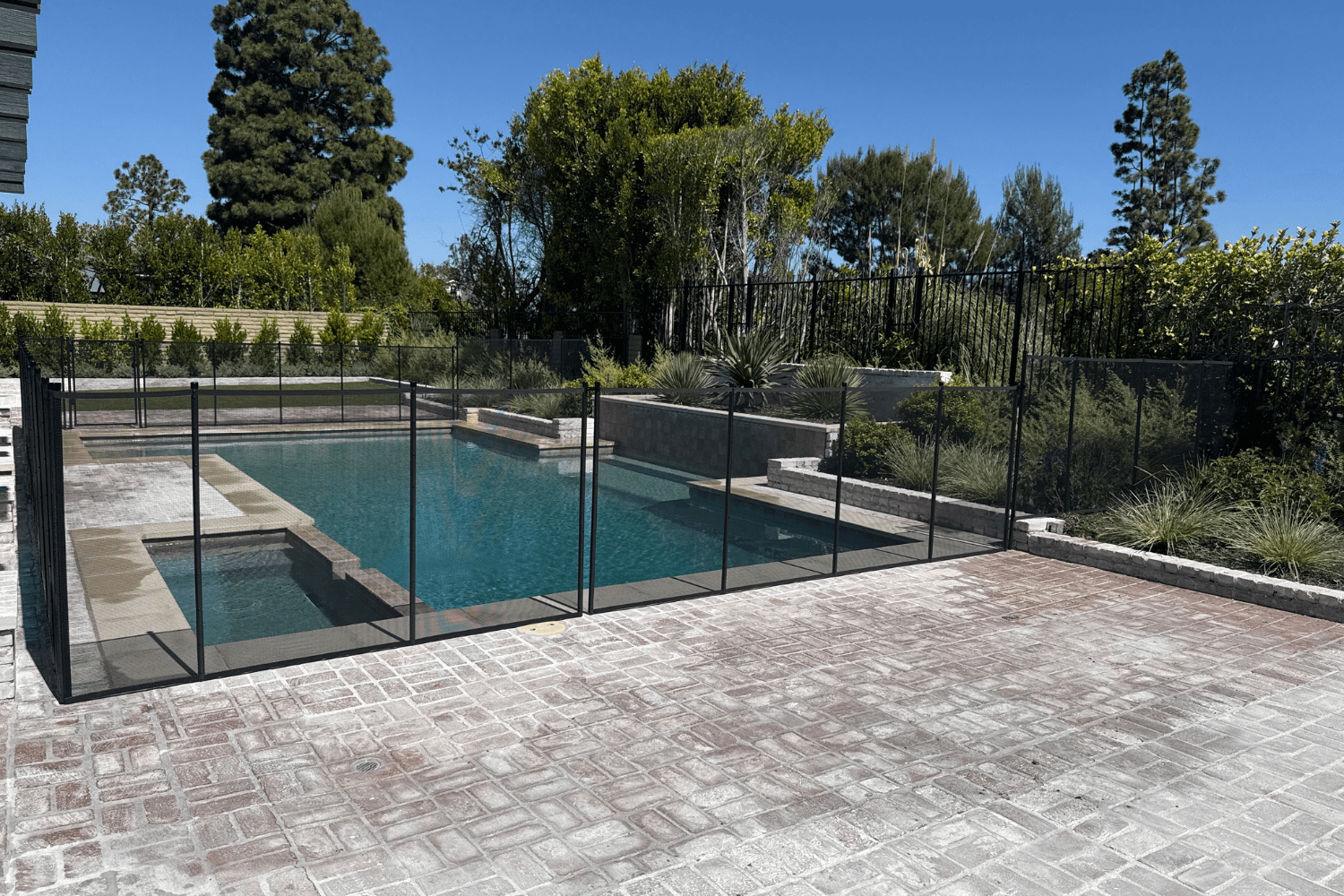
A properly installed, well‑maintained pool fence is the backbone of any safety plan. It is the one layer that should be working quietly in the background all the time, whether you are thinking about the pool or not.
For most families, that backbone looks like:
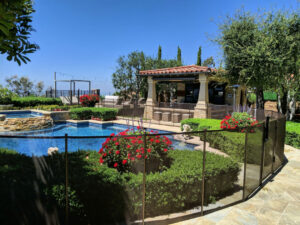
A four‑sided barrier that isolates the pool from the house and yard, not just a shared perimeter fence.
A self‑closing, self‑latching gate that opens away from the water and is positioned where people actually walk.
Posts, mesh, and hardware that are checked regularly so small issues do not become big weaknesses.
When you think about layers, it helps to be clear about what you expect the fence to do and what you do not expect it to do. A fence is there to stop unsupervised access, especially for young children and pets. It is not a substitute for rules once the gate is open, nor is it a guarantee when adults intentionally leave it propped during a party or project.
Planning layers means accepting that even a good fence has limits, and deciding where you want backup.
Add Layers Where Real Life Puts the Fence Under Pressure
Instead of listing every possible product, it is more useful to ask: When is our fence most likely to be stressed, ignored, or accidentally defeated? For most households, the answers cluster around a few predictable situations. Each is a good candidate for an extra layer.
1. When doors and gates open without you noticing
This is the “I just turned around for a second” problem. Maybe a child figures out a handle, a guest opens the wrong door, or a teen forgets to close the gate behind them. These moments are why audible layers exist.
These do not keep anyone out by themselves, but they buy you seconds by making sure you hear when a door or gate opens toward the pool. They are especially useful when you are cooking, answering the door, or moving between rooms.
Simple visual cues.
A bright latch marker or small reminder sign by the gate can help guests realize, “This needs to stay closed,” without you having to explain it every time.
The fence is still doing the physical work. The alarm and cues are there to help your attention keep up when life is loud.
2. When the pool is open but you are doing something else
There are plenty of times when the pool is technically “open,” but nobody is actively swimming. Maybe you just finished skimming, turned the heater on, or opened the gate to set up furniture. In these in‑between moments, it is easy to underestimate how quickly someone can reach the water.
Helpful layers here:
A clear “pool open” vs “pool closed” routine.
For example:
Pool closed = gate latched, alarms on if you use them, toys and floats put away, cover or net engaged if you have one.
Pool open = at least one adult in “water watcher” mode, gate used normally, not propped.
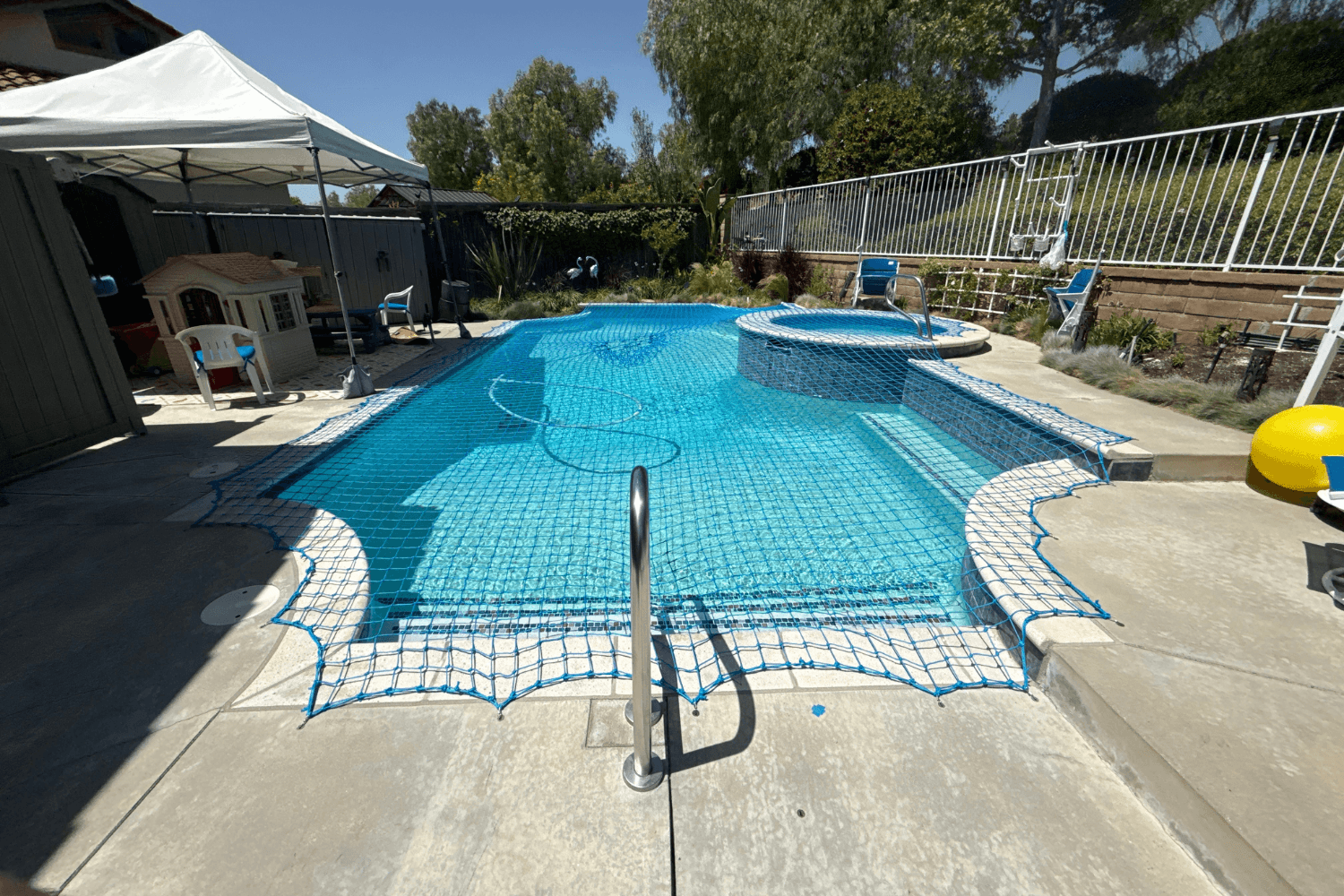
Covers or nets as backup when the fence is temporarily less controlled.
If you are doing yard work, hosting workers, or moving things in and out of the pool area, a safety cover or properly tensioned net can give you a second barrier over the water while the gate is opening and closing more than usual.
Here, the extra layer is not there all day every day, but it is part of a specific routine you follow whenever the fence’s job gets harder.
3. When supervision is shared or inconsistent
Even the most attentive adults get tired or overwhelmed, especially when multiple kids, guests, or tasks compete for attention. That is why many safety experts encourage families to formalize supervision instead of assuming “someone is watching.”
Helpful layers here:
A “water watcher” system during active swim time.
One adult at a time agrees to be fully focused on the water: no phone, no chores, no social media, usually in 15–20 minute shifts. When their turn is over, they hand off the role clearly to the next adult.
Written rules that back up the watcher.
Simple rules like “No one goes through the gate unless the watcher is by the pool” or “If the watcher needs to step away, everyone gets out until the next watcher is ready” keep supervision from becoming a vague idea.
A fence cannot fix unclear roles. But when you combine a solid barrier with explicit supervision layers, you reduce the chance that everyone assumes “someone else” is in charge.
4. When people who don’t live there use the pool
Visiting family, babysitters, nannies, and houseguests all interact with your backyard differently than you do. They may not know which door opens to the pool, how deep certain areas are, or how the gate is meant to work.
Helpful layers here:
Orientation for caregivers.
For sitters or nannies, a quick walkthrough of the gate, fence, alarms, and rules, including what “pool closed” looks like, is as important as sharing emergency contacts.
Visible, simple rule reminders for guests.
A small sign near the gate or patio with 3–5 non‑negotiables (“Keep gate closed and latched,” “No swimming without an adult,” “Do not prop the gate open”) does a lot of quiet work during gatherings or overnight stays.
These layers are less about hardware and more about making sure everyone who uses the backyard understands the safety system you already have.
Build One Simple Layer Plan Around Your Own “Tricky Moments”
You do not need a complicated diagram to have a solid layered plan. A single piece of paper, or a note in your phone, is enough to outline how your fence, routines, and any extra products work together.
Try answering these questions:
What does our fence handle on its own?
Example: “Stops young kids from entering the pool area when no one has opened the gate for swim time.”
When is our fence most at risk of being left open, propped, or ignored?
After school? During weekend barbecues? When grandparents visit?
What extra layer matches each of those “tricky moments”?
Alarm for doors during dinner prep.
Net or cover engaged whenever no one is swimming, especially overnight.
Water‑watcher routine for parties and playdates.
Clear rules and quick orientation for sitters and guests.
If you notice that you are relying heavily on “We’ll remember” or “We’ll just be careful” in more than one of those tricky spots, that is a sign your safety system is too thin in that area. That is where adding a concrete layer, a product, a routine, or both, can make a real difference.
Keep It Flexible as Your Life Changes
The way you used your pool three years ago might not match how you use it today. Kids grow, work schedules change, relatives move closer or farther away, and your backyard itself may have evolved with new features or furniture.
A layered pool safety system is not something you design once and forget. It should flex as your routines change:
New toddler in the family? You might add a secondary layer like a net or alarms even if you did not need them before.
Working from home more often? Your “pool closed” routine and alarm usage might become more important.
Hosting more often or considering short‑term rentals? You may want clearer signage, stricter gate rules, and possibly additional barriers between the house and the pool.
The goal is not to make your backyard feel restrictive. It is to let you enjoy the pool more confidently, knowing that your fence and layers are designed around the way you actually live, not just what the rulebook says on paper.
A sliding deck pool cover does more than protect the water. When closed, it can conceal the pool and turn its footprint into usable outdoor space for relaxing, entertaining, and everyday backyard living. Learn whether this custom solution may be right for your pool project.
A winter cover protects the water, but a pool fence controls access to the entire pool area. Learn why removable mesh fencing can still play an important role after your pool is closed, and when seasonal removal may make sense.
“Covered” can mean very different things for your pool and backyard. Learn how safety nets, leaf covers, winter safety covers, automatic covers, and sliding deck systems affect access, safety, maintenance, and how you can use the space around, and above, your pool.