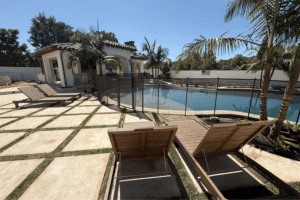
How to Choose the Best Pool Safety Solution for a Sloped or Irregular Backyard
How to Choose the Best Pool Safety Solution for a Sloped or Irregular Backyard
If your pool sits on a hill, next to a retaining wall, or in a quirky backyard, choosing the right safety solution can feel overwhelming. You know you need to protect your family and meet local requirements, but most examples online show flat, simple yards that look nothing like yours.
The good news is that you still have strong options. With the right combination of pool fence, safety net, or cover, and a layout that respects the way your family actually uses the space, you can secure a sloped or irregular yard without giving up accessibility or aesthetics.
Start With Your Safety and Code Requirements
Before you compare products, you need clarity on two non‑negotiables: what keeps your family safest and what your local code requires.
Check your local pool barrier code: Many cities and states specify fence height, latch and gate requirements, and how close a barrier must be to the water’s edge. Sloped lots and retaining walls can affect how those rules are interpreted, so it’s worth confirming what’s allowed before you design around a solution.
Consider who you’re protecting: Households with toddlers, non‑swimmers, visiting grandchildren, or frequent guests usually benefit most from a dedicated physical barrier that’s always in place, typically a pool fence, rather than something that has to be opened or removed each time.
Think about access patterns: Do you use the pool every day in season, only on weekends, or mainly in the off‑season? How often you’re opening and closing the barrier will influence whether a removable fence, safety net, or cover makes the most sense.
Once you understand your minimum legal and safety requirements, you can start comparing how each solution behaves on an uneven or unusually shaped yard.
Common Challenges in Sloped and Irregular Yards
Sloped or irregular backyards introduce design challenges that you don’t see on a standard rectangular patio. Being aware of these ahead of time helps you choose the right solution, and the right layout.
Steep Grades and Hillsides:
A barrier that follows the slope must maintain consistent height and spacing, so you avoid gaps that a child or pet could slip under or through.
Retaining Walls and Drops:
Walls, raised planters, and sudden changes in elevation can create “climbable” surfaces or dangerous falls if the barrier is placed incorrectly.
Narrow Walkways and Side Yards:
Tight spaces may not have room for a fence set back from the water, especially if you also need walking space and access for equipment.
Multi‑Level Patios and Decks:
Raised decks, sunken seating areas, and steps mean you need to think in three dimensions; where could someone realistically approach the water, and how do you block those paths?
Irregular Pool Shapes:
Freeform pools, attached spas, tanning ledges, and water features often require custom curves and angles in any fence or cover system.
Keep these conditions in mind as you compare the main categories of pool safety solutions. Different products shine in different layouts.
When a Removable Mesh Pool Fence Is the Best Choice
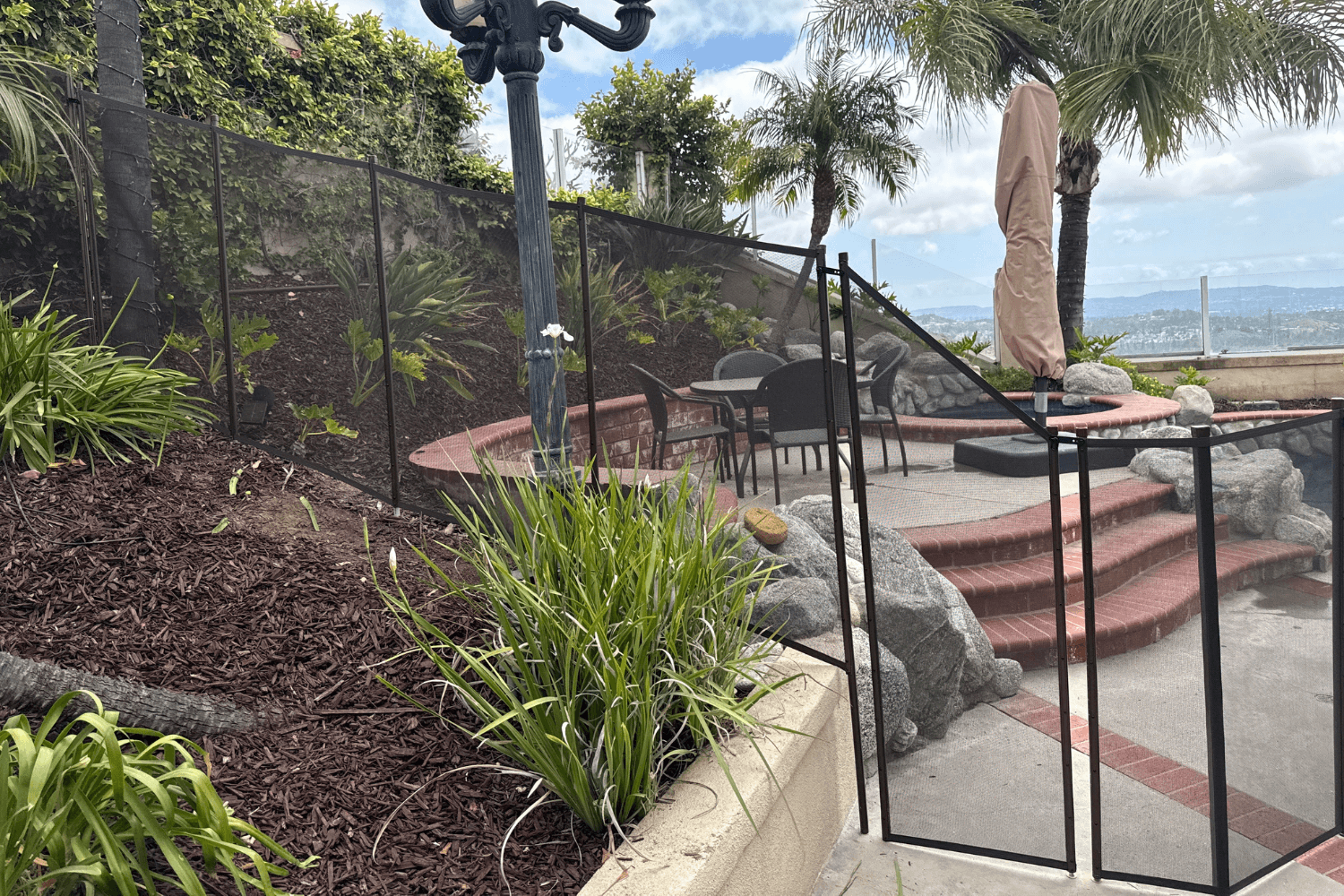
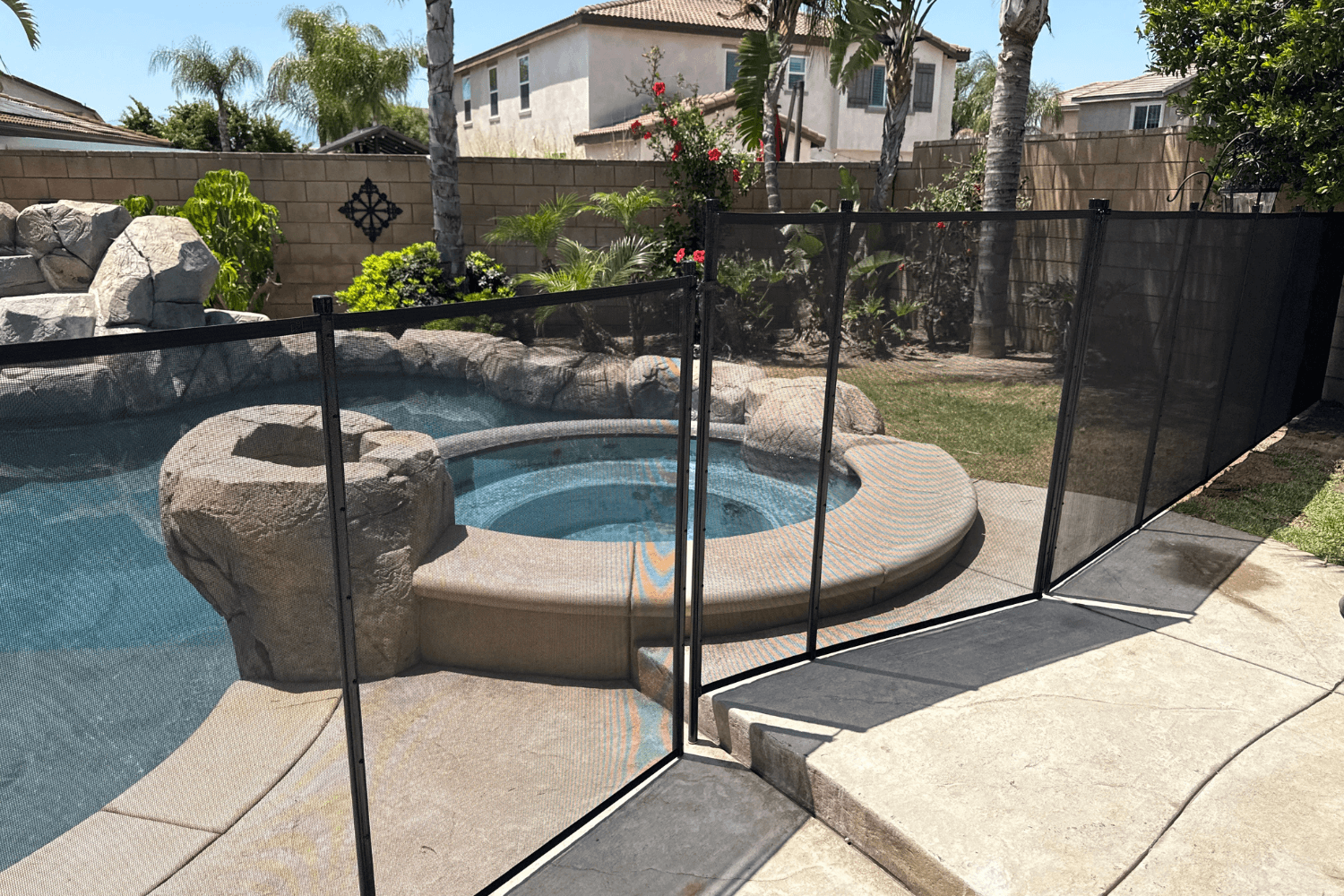
For many sloped or irregular backyards, a removable mesh pool fence is still the most flexible and reliable primary safety solution.
Why Mesh Fences Work Well on Uneven Ground
A high‑quality removable fence system is designed to follow the contours of your deck or yard while maintaining a consistent barrier height and tension. Professional‑grade systems use evenly spaced posts and mesh panels that can be set in a series of straight segments, even on a curve or slope, so you can work around:
Curved pool edges
Gentle grades
Irregular patios and planter beds
With careful layout, the fence line can “step” along a slope in small increments, keeping the bottom gap tight to the surface while meeting height requirements.
Layout Tips for Sloped or Quirky Yards
When planning a mesh fence around a non‑standard yard, pay particular attention to:
Gate placement and traffic flow: Place gates where your family naturally enters the pool area, away from steep steps or narrow pinch points. A self‑closing, self‑latching gate is especially important on grades where doors and walkways approach at odd angles.
Using existing structures wisely: Sometimes you can route the fence to tie into a wall, railing, or other permanent feature, provided it meets strength and height requirements, to minimize drilling and awkward turns.
Avoiding climbable surfaces: On sloped sites, kids can sometimes reach the top of a fence by standing on a retaining wall or planter. Make sure the barrier isn’t close enough to those features to be used as a ladder.
For households with young children or frequent visitors, a removable mesh fence is often the best first choice. It creates a dedicated, always‑present barrier that doesn’t rely on remembering to close a cover every time.
When a Pool Safety Net Makes Sense
In some yards, there simply isn’t enough room for a fence line that maintains safe clearances, or you want to keep the deck visually open. This is where a pool safety net can be a strong option.
Advantages of a Safety Net on Irregular Layouts
A well‑designed safety net stretches right over the water’s surface and anchors into points around the pool edge. Because it follows the pool’s outline instead of your yard’s geometry, it can work especially well when:
The deck is narrow on one or more sides
There are multiple curves, attached spas, or water features
The yard falls away steeply on the non‑house side of the pool
Rather than trying to force a fence into a cramped or awkward path, the net simply covers the water itself, creating a safety layer without occupying walking space or requiring long fence runs along a hillside.
Practical Trade‑Offs to Consider
A net does require an active routine: you remove it before swimming and secure it fully when you’re done. For families who swim often during the season, this extra step is an important consideration.
However, if your main challenge is lack of fence room on a slope or around complex shapes, a safety net can provide strong protection where a continuous fence just isn’t practical.
How Safety Covers Fit Into Sloped or Tiered Yards
Pool safety covers, especially those designed to support weight when properly installed, can also play a role in irregular yards, particularly for off‑season protection.
Where Pool Covers Are Helpful
Off‑season safety and debris control: A properly tensioned safety cover can prevent accidental access when the pool is not in use and keep leaves and debris out; useful in yards with overhanging trees on a slope.
Rectangular or semi‑regular shapes: The more rectangular your pool and deck anchor layout, the easier it usually is to install a tensioned safety cover that lies flat and secure.
On heavily tiered or extremely irregular decks, a safety cover may require custom planning and hardware placement to avoid trip hazards and maintain even tension. In some cases, you might still rely on a fence as the main in‑season barrier and use a cover primarily in the off‑season.
Combining Solutions for Tricky Backyards
Many sloped or unusual yards are best served by a thoughtful combination of products, rather than a single barrier type.
Combination Examples:
Fence + Net: Use a removable mesh fence as the primary barrier on the house and accessible sides of the pool, and a safety net to secure hard‑to‑fence edges near steep drops or retaining walls.
Fence + Cover: Install a fence for day‑to‑day protection during the swim season, and use a safety cover for winter or long periods when the pool isn’t in use.
Short Fence Runs in Key Locations: In some cases, shorter sections of fence can block specific approach paths, like a side yard or stair run, while a net or cover secures the water surface overall.
This “layered” approach lets you adapt to the unique geometry of your yard while still prioritizing simple, repeatable safety habits for your family.
DIY vs Professional Help on Sloped Sites
On a perfectly flat, straightforward deck, a skilled DIYer may feel comfortable tackling a removable fence kit on their own. Sloped or irregular yards, however, raise the stakes.
Consider Getting Help From a Professional Installer If:
Your yard includes steep grades, retaining walls, or multiple elevation changes
You aren’t confident in measuring and drilling at consistent angles on a slope
You need help interpreting how local barrier rules apply to your specific layout
You’re combining multiple safety products and want a cohesive plan
A professional who works with pool safety systems regularly can spot potential problem areas, like climbable features, hidden gaps, or awkward gate locations, before installation, not after you’ve already drilled into a decorative surface.
If you’re comfortable with tools and your slope is moderate, DIY pool fencing can still be a good option. Just be sure to:
Double‑check all measurements and mark your fence line carefully before drilling
Take your time when drilling at an angle on sloped concrete or pavers
Test gate operation thoroughly once installed to make sure it closes and latches reliably
Questions to Ask Before You Decide
To narrow down your options for a sloped or irregular backyard, walk through these questions:
Who is most at risk around your pool (toddlers, pets, older relatives, guests)?
How steep is the grade around the pool, and where are the level walking paths?
Are there retaining walls, planters, or steps that could be used as climbing aids?
How often do you use the pool in season, and how often are you willing to open and close a net or cover?
Does your local code specify a fence, or can a net/cover be part of a compliant barrier system?
Are you comfortable installing a system yourself, or would you prefer a local expert to handle layout and installation?
Your answers will help point you toward the right mix of fence, net, and cover, and whether DIY or professional installation is the better path for your particular yard.
Explore Solutions That Fit Your Yard
Even if your backyard is sloped, narrow, or oddly shaped, you don’t have to compromise on pool safety. With the right combination of removable mesh fencing, safety nets, and covers, and a layout planned around your unique terrain, you can create a safer environment that still works with how your family lives and plays. Browse All‑Safe’s full selection of pool safety equipment to see fence, net, and cover options that can be adapted to challenging backyards, explore DIY‑friendly products and replacement parts if you’re comfortable tackling a project yourself, or schedule an estimate with a local installer to get expert recommendations tailored to your specific yard.
A pool fence is essential, but it is not the whole story. Real‑life pool safety means planning layers of protection that still work on busy, distracted days, not just on paper. This guide shows you how to build a layered safety system around the way your family actually uses your pool.
Halfway through swim season is the perfect time to double‑check that your pool fence, gate, and safety gear are still doing their job. Use this 15‑minute mid‑summer pool safety audit to quickly spot issues and decide what needs a simple fix, parts replacement, or a pro’s help.
Today’s families use their pools for remote work breaks, fitness, therapy, parties, and visiting guests, not just weekend free‑swim. This shift changes what a “good” pool fence and safety plan look like. Here’s how modern habits should shape your fence layout, gate placement, and layers of protection.