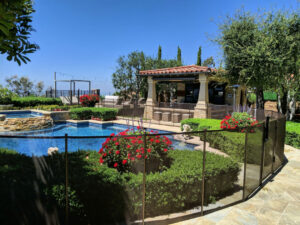
DIY Pool Fence Prep: What to Do Before Ordering Anything
DIY pool fencing can be a great option for homeowners who want more control over the timeline and the total project cost. It can also feel intimidating if you are not sure what you need, how the layout should work, or whether your yard will cooperate.
The good news is that most DIY problems do not come from installing the fence itself. They come from skipping the planning stage. A little preparation up front helps you avoid the most common ordering mistakes, reduce frustration on install day, and end up with a barrier that truly fits your daily routine.
Why DIY Pool Fence Prep Matters
A pool fence is not just a product you buy. It is a safety system that needs to fit your yard and your household habits. If your fence line feels awkward or the gate ends up in the wrong spot, people will create shortcuts. That is when safety slips.
Planning helps you:
Choose a layout that makes safe habits easy
Avoid buying too much or too little fencing
Anticipate surface limitations before you commit
Make sure the barrier you install aligns with local expectations
Even if you hire help later, this planning phase is still valuable because it clarifies what you want.
Confirm Local Requirements Before You Order
Before you measure anything, confirm what your area requires for pool barriers. Rules vary widely by city and county. The goal is not to become an expert on codes. The goal is to avoid buying a setup that lacks a required feature, especially regarding gate behavior.
At a minimum, confirm:
Minimum fence height requirements in your area
Gate requirements like self-closing and self-latching
Any rules about gaps or spacing for pool barriers
Any HOA restrictions that might affect placement or appearance
If you are not sure where to start, your local building department website is often the fastest source. If you live in an HOA community, check those rules too.
Walk Your Yard Like a Planner, Not an Installer
Before you try to pick a fence line, walk the yard with a “how do we use this space?” mindset.
Start with these questions:
Where do people naturally enter the pool area?
Where do kids play when the pool is not in use?
Which door is used most often to reach the pool?
Are there high-traffic paths that should stay outside the fence?
Where will the pool equipment, furniture, or storage areas be located?
This step helps you avoid designing a fence line that looks good on paper but does not work with real movement patterns.
A good fence layout supports daily routines. A frustrating fence layout encourages people to bypass the gate.
Choose a Fence Line That Matches Real Life
There are two common ways homeowners think about fence placement.
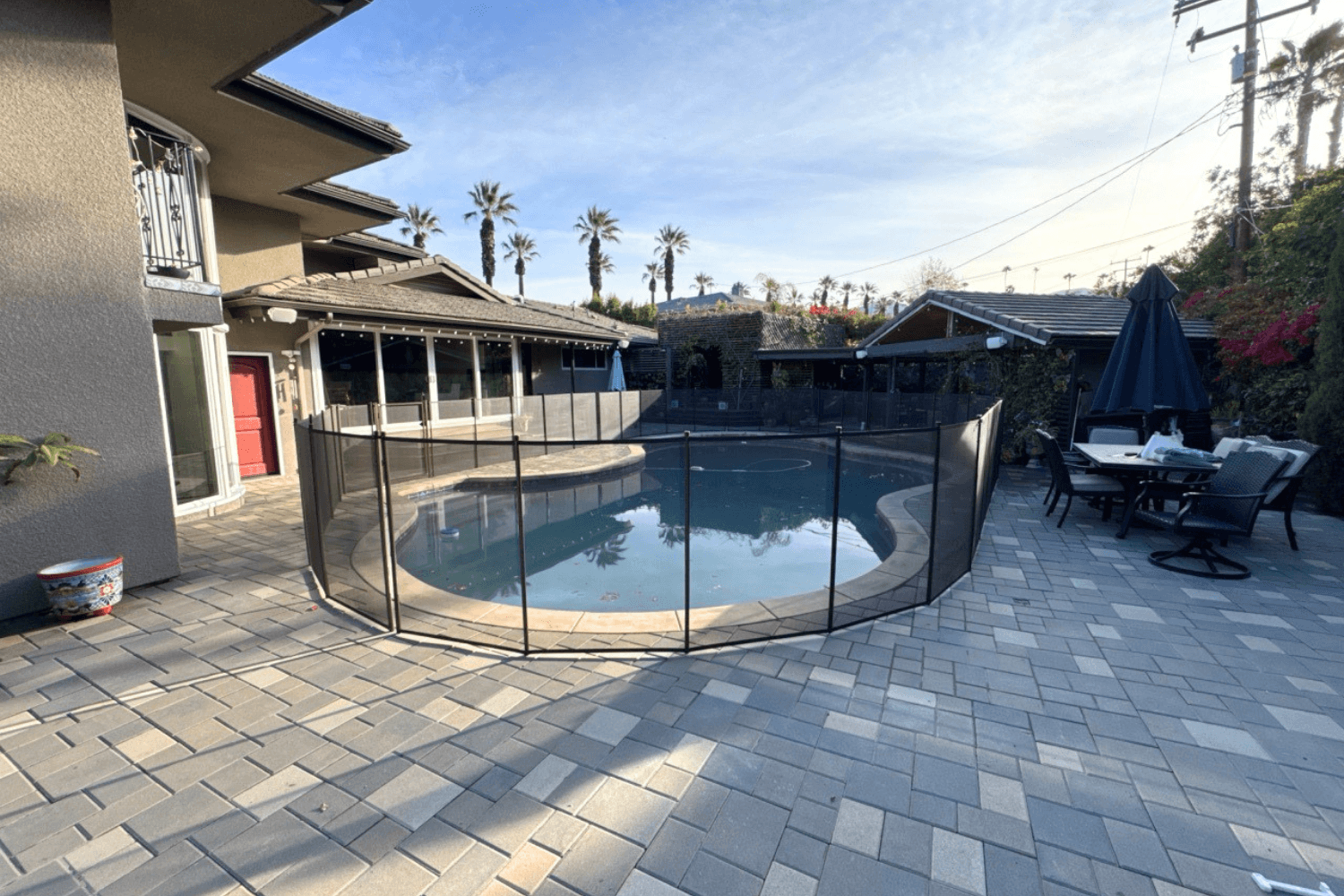
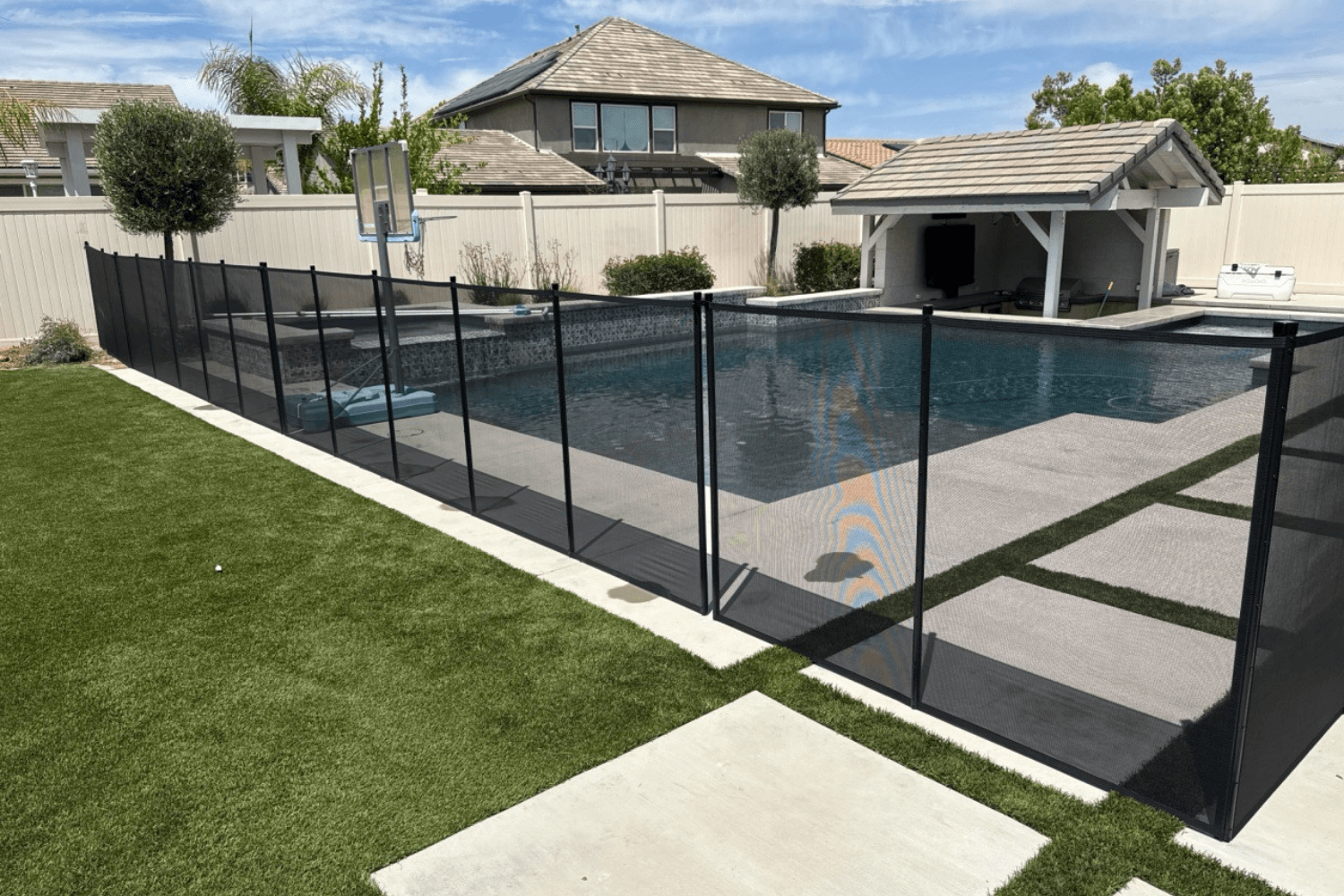
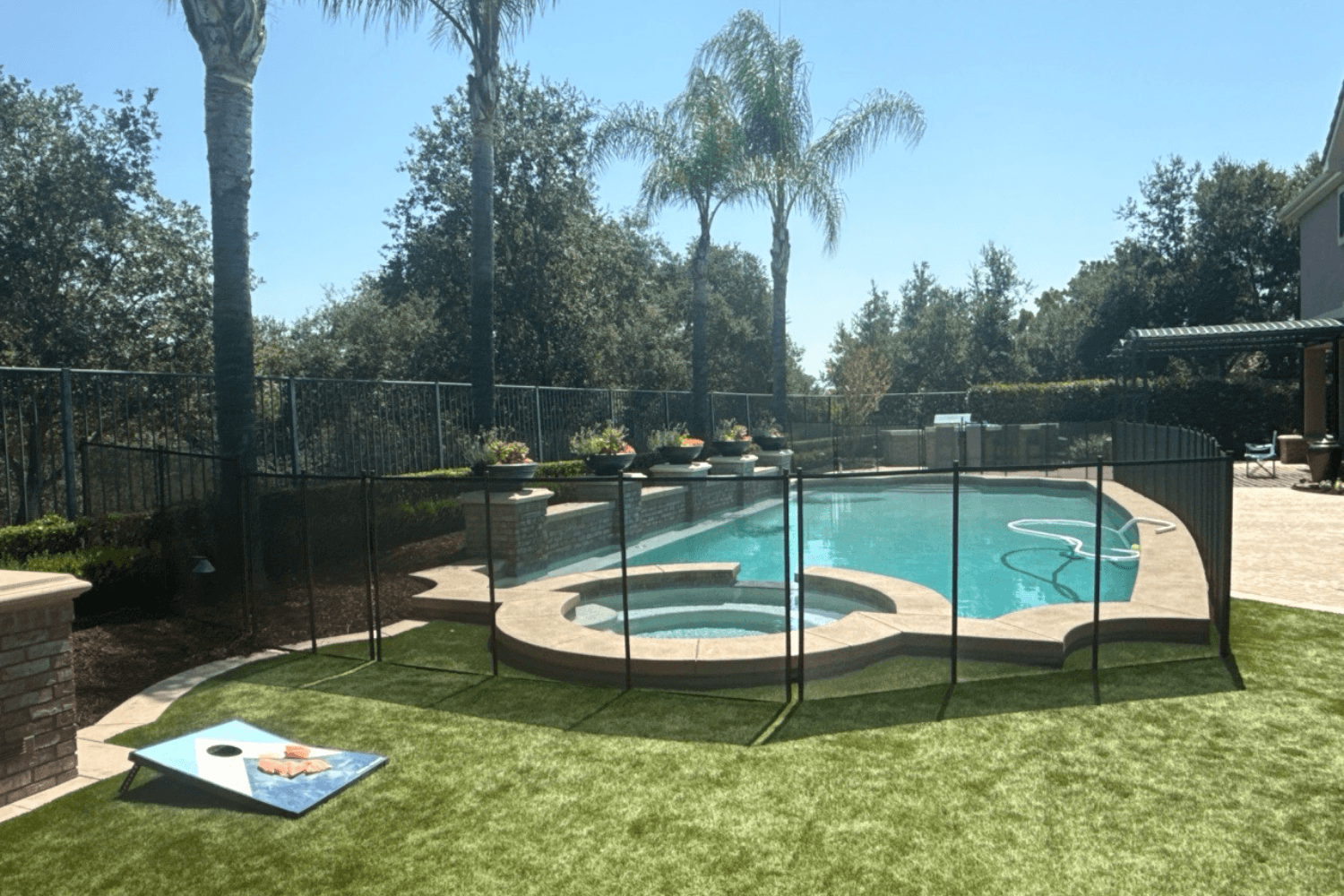
Some choose a tight perimeter that hugs the pool. Others choose a wider perimeter, creating a larger fenced area around the pool. Either approach can work, but the right choice depends on how the backyard is used.
A tighter perimeter can preserve more open yard space outside the pool zone. A wider perimeter can create a larger “pool area” that includes seating or lounging zones. What matters is clarity. The fence should clearly define the access boundary.
If you have children, pets, or frequent guests, clarity matters even more. The fence line should make it obvious which area requires supervision and controlled entry.
Gate Placement: The Decision That Affects Daily Use
If the fence is the boundary, the gate is the habit. Gate placement influences behavior every day.
The ideal gate location usually aligns with the most natural route from the house to the pool. If people have to walk around furniture, cut through landscaping, or take an inconvenient route, they are more likely to prop the gate open or step around the system.
When thinking about gate placement, consider:
The most common path from the house to the pool
Whether the gate swing will be blocked by furniture or planters
Whether the gate area stays clear during parties and gatherings
Whether the gate location is visible enough to reinforce safe habits
A well-placed gate makes your fence easier to live with. It also makes it more likely that the barrier is used correctly.
Surface Considerations: What to Verify Ahead of Time
Surface type affects planning and ordering because it affects feasibility. Most homeowners have a mix of surfaces, such as concrete near the house, pavers near the pool, or decking near a patio.
Before ordering, confirm:
Which surfaces will be used for fence placement
Whether those surfaces are stable and in good condition
Whether there are known issues like shifting pavers or soft decking areas
Where you may need to adjust the fence line to avoid problem spots
This helps you avoid planning a perfect layout that later becomes impossible due to surface conditions.
One common mistake is underestimating the amount of fencing needed. People often measure straight lines and forget about curves, angles, and real-world routing around features.
Another mistake is failing to account for gate placement. A gate is part of the total perimeter, and its location affects how fencing is allocated.
Some homeowners also skip thinking about obstacles. Landscaping, planters, steps, and outdoor kitchens can force small layout changes that affect measurement.
Finally, some homeowners focus only on the fence and forget that the gate hardware and daily function matter just as much. A safe fence with a frustrating gate becomes a fence that people try to work around.
You have time to measure carefully and plan placement
You are comfortable using basic tools
If your yard has steep slopes, unstable surfaces, or complex routing, professional help may save time and reduce frustration. Choosing professional installation is not a failure. It is often a practical decision for homeowners who want precision.
Order Your Pool Safety Equipment With Confidence
Once your planning is solid, ordering becomes much simpler. You have a clear fence line, a clear gate location, and a better understanding of what your yard will support.
Before you hit purchase, do one final check:
Confirm your measurements
Confirm your gate location and swing path
Confirm your surface plan
Confirm local requirements for barrier and gate behavior
Good pool fence planning sets you up for a smoother DIY experience and a finished barrier that supports safer habits in everyday life.
A sliding deck pool cover does more than protect the water. When closed, it can conceal the pool and turn its footprint into usable outdoor space for relaxing, entertaining, and everyday backyard living. Learn whether this custom solution may be right for your pool project.
A winter cover protects the water, but a pool fence controls access to the entire pool area. Learn why removable mesh fencing can still play an important role after your pool is closed, and when seasonal removal may make sense.
“Covered” can mean very different things for your pool and backyard. Learn how safety nets, leaf covers, winter safety covers, automatic covers, and sliding deck systems affect access, safety, maintenance, and how you can use the space around, and above, your pool.