Temporary Pool Fencing: When a Removable Mesh Fence Makes Sense
Temporary Pool Fencing: When a Removable Mesh Fence Makes Sense
Many homeowners start looking for a pool barrier because of a permanent change, like having a baby, adopting a dog, or moving into a home with a pool. Others have a more immediate need. Visiting family. A big gathering. A backyard renovation. A short period when supervision may be less predictable.
That is where temporary pool fencing can be a smart solution. The goal is to add a layer of protection when you need it most, without committing to a permanent structure that changes the look and function of your backyard.
In this guide, we will break down what “temporary” really means, when it makes sense to consider a removable barrier, and what to look for so your setup stays secure and practical in daily use.
What Temporary Pool Fencing Means for Homeowners
Temporary pool fencing is typically a barrier that can be installed and later removed without a permanent frame remaining in place. In many cases, homeowners use it to create a controlled pool area during specific seasons or life stages.
It is important to define what temporary does not mean. It does not mean flimsy, unstable, or optional. A pool barrier should still function as a true barrier. It should discourage access, provide a reliable physical boundary, and support safe habits around the pool.
Temporary pool fencing is best thought of as flexible. It can be installed when your household needs more protection, then removed later when your situation changes.
Common Situations Where Temporary Pool Fencing Helps
Temporary barriers appeal to homeowners because real-life changes can happen quickly. Many families find themselves needing a pool barrier earlier than they expected, then needing flexibility later.
Here are a few common situations where temporary pool fencing is a practical fit.
Visiting kids or extended family
You might not have small children at home, but you may host family visits where toddlers are present. A barrier during those periods helps prevent unsupervised access when routines are different, and the backyard is busy.
Parties and gatherings
Pool gatherings introduce distractions. People assume someone else is watching. Kids move between groups. A barrier helps create a controlled zone and reinforces the message that the pool area is not open access.
Home renovations and backyard projects
Construction work around the pool can create hazards like tools, materials, temporary openings, and extra foot traffic. Temporary fencing can help keep the pool area separated while work is underway.
New homeowners in transition
Many people buy homes with pools and need time to evaluate layout, local requirements, and the best long-term setup. Temporary pool fencing can offer peace of mind while they plan their final solution.
Seasonal use homes
Some homes are occupied seasonally. A removable pool fence can be used during periods of higher activity, then removed when the property is not in use, depending on the homeowner’s safety plan and local requirements.
Why Removable Mesh Fencing Is a Popular Temporary Option
There are many “temporary” options on the market, but not all are designed for real safety. Homeowners often prefer a removable pool fence because it provides a stronger barrier than lightweight alternatives and is designed specifically for pool environments.
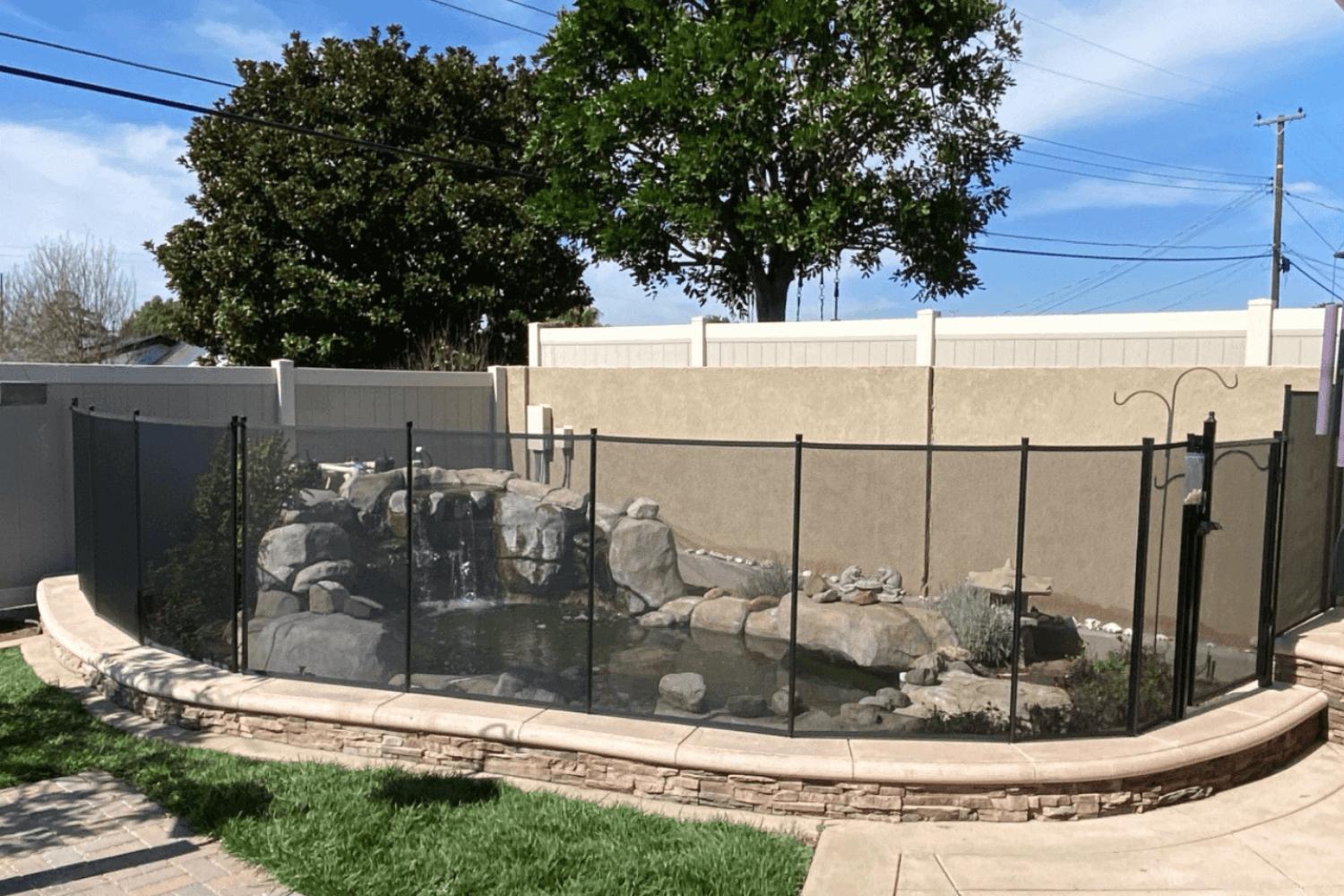
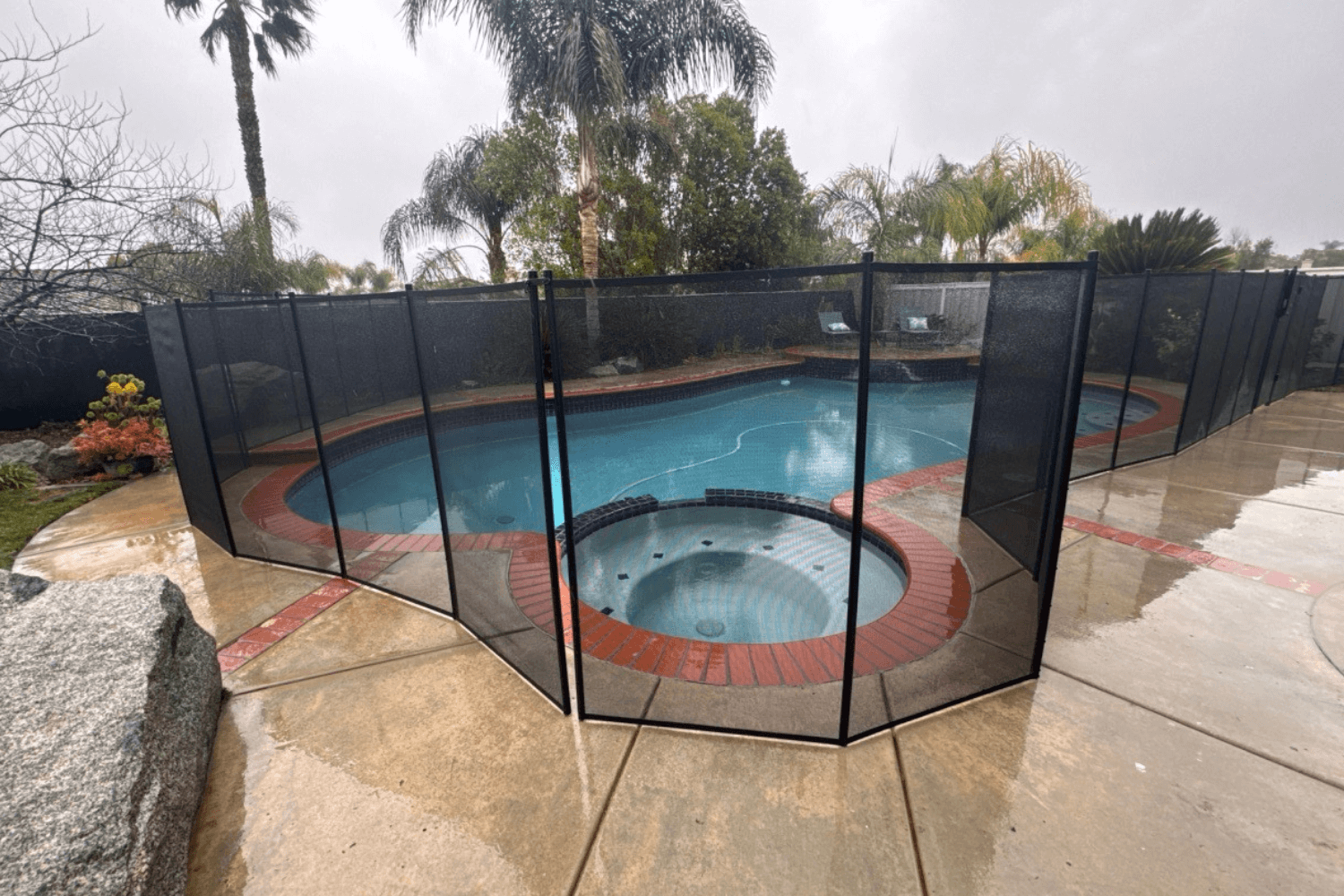
Removable mesh fences are popular because they are climb-resistant, visually open, and purpose-built to create a secure pool perimeter. They also fit a wide range of pool shapes and backyard layouts, which is important because many pools are not simple rectangles.
For homeowners who want a barrier that looks clean and functions reliably, a removable mesh system often strikes the best balance between safety and flexibility.
What to Look For in Temporary Pool Fencing
Not all temporary pool fencing performs the same way. If you are shopping for a barrier you plan to install and remove, you’ll want to focus on stability, access control, and how the system holds up to daily use.
Stability and tension
A pool barrier should feel firm when you test it. Mesh should remain taut, and fence sections should not wobble. A stable barrier is harder to defeat and easier to trust.
Visibility
A fence that blocks visibility can create new safety problems. Many homeowners prefer mesh barriers because they maintain sight lines across the pool area, which supports supervision.
Because temporary fences are often removable systems, homeowners frequently install them into patios and deck surfaces. Your surface matters for planning. Concrete, pavers, and wood decking all behave differently, and stability depends on the condition of what you are anchoring into.
Realistic use patterns
Think about how your household uses the backyard. Where do people enter the pool area? Where do kids play? A good fence layout makes safe behavior easier, not harder.
Gate Placement and Daily Use Considerations
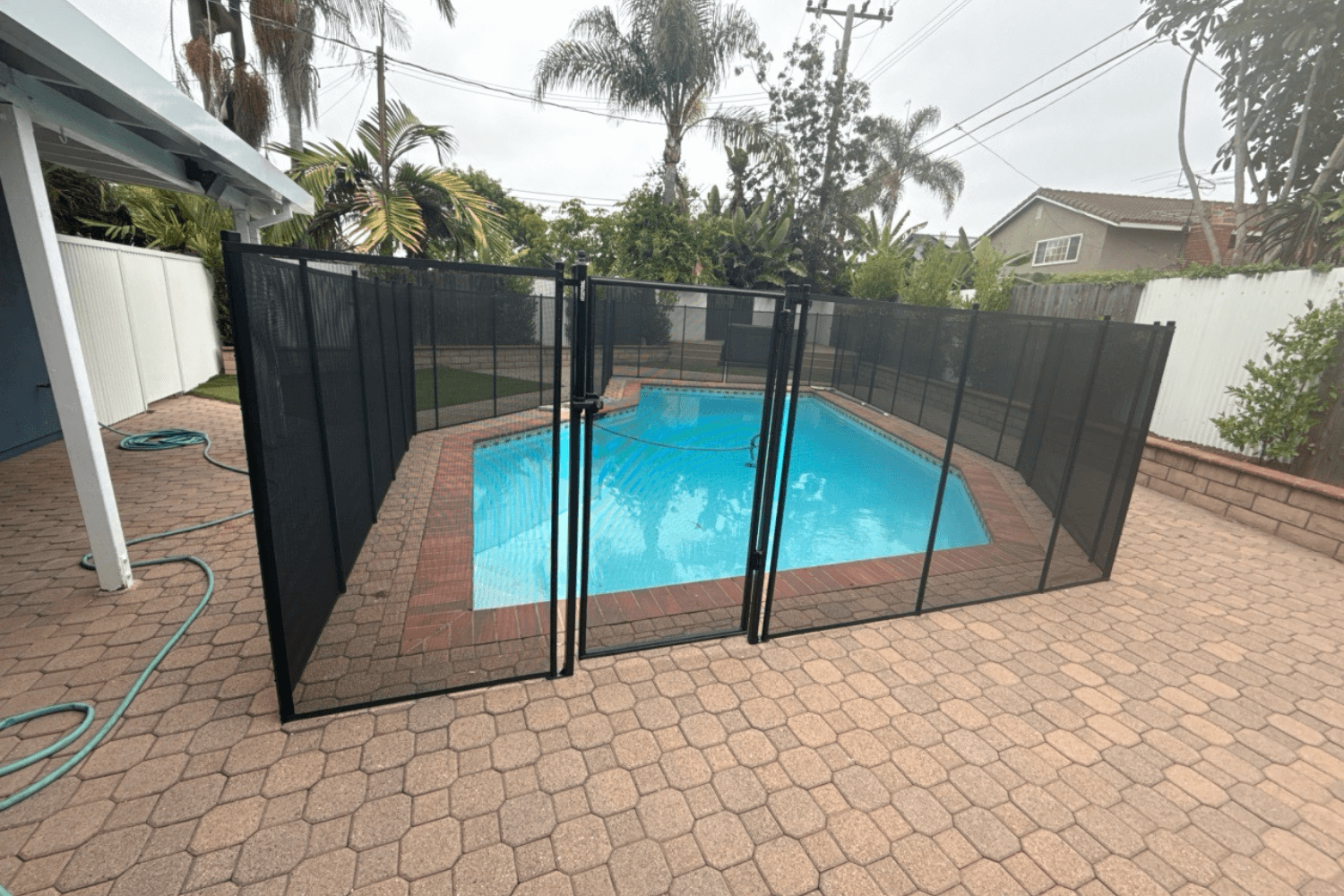
The best temporary fence is one that people actually use correctly. Gate placement is one of the most important planning decisions because it determines daily habits.
If the gate is placed in an awkward location, people will look for shortcuts. They will prop it open. They will step around sections. A safer plan is to place the gate along the most natural walking path from the house to the pool.
Also consider how the gate will perform when the yard is busy. Make sure the swing path is not blocked by furniture, planters, or toys. A gate should be able to close freely and latch consistently every time.
A quick test to keep in mind is this: if you can imagine someone carrying towels and trying to enter the pool area, does the gate placement make that easy and safe, or does it encourage workarounds?
Temporary Does Not Mean Optional: A Note on Local Codes
Because local pool barrier rules vary, it is important to treat temporary fencing with the same seriousness as any other barrier. In many areas, a pool fence is required regardless of the season. Some locations also specify gate behavior, height, and spacing requirements.
Before installing any temporary pool fencing, check your local rules. If you live in a community with an HOA, review those guidelines as well.
Even if your area does not mandate a specific barrier, the purpose of the fence is still the same. It is a physical layer that helps prevent unsupervised access. That is why quality and correct use matter.
Planning for Removal, Storage, and Reinstall
One reason homeowners choose removable systems is flexibility. Still, removal and reinstall should be planned realistically.
Start by thinking about how often you expect to remove the fence. Some people remove it rarely, such as when guests leave. Others remove it seasonally. Your plan should match your household habits, not a perfect scenario.
When storing fence components, keep them in a clean, dry place. Avoid leaving mesh folded in damp conditions where mildew can develop. Store smaller components in a labeled container so you do not lose pieces that you need for reinstallation.
When it is time to reinstall, treat it like a safety check. Confirm the mesh is taut, poles are stable, and gates close and latch properly. A removable fence still needs to perform consistently every time it goes back up.
How to Choose the Right Temporary Barrier for Your Backyard
Choosing temporary pool fencing starts with understanding your use case. Ask yourself what problem you are solving. Are you trying to protect visiting children? Create a safer backyard during renovations? Add a barrier while planning a long-term solution?
Once you are clear on the need, choose a system that supports real safety, not just the appearance of a barrier. A removable pool fence is often a strong option because it is designed to function as a true pool barrier while still allowing flexibility as your household changes.
If you want your temporary setup to work well day to day, prioritize a stable layout, a reliable gate, and a plan for how the fence will be used when the yard is busy. Temporary can still be dependable when the system is chosen thoughtfully and used consistently.
Ready to Choose a Temporary Pool Fence You Can Trust?
If you are exploring temporary pool fencing because your needs are changing, a removable mesh system is one of the most reliable ways to add protection without committing to a permanent structure. All-Safe’s removable mesh pool fencing is designed to create a secure pool barrier that fits real backyards and real routines.
Mesh removable pool fencing is a flexible, affordable way to add boundaries to pickleball courts. It keeps balls contained, looks clean, and can be removed when needed.
Just installed a removable pool fence? Here’s what’s normal in the first weeks, what to watch for with gate performance, and how to keep the mesh clean and secure through seasonal changes.
Not sure whether to choose a removable pool fence or a permanent fence? This guide breaks down the real differences in safety, daily habits, maintenance, and visibility so you can pick the best barrier for your home and lifestyle.