Pool Fence Installation on Pavers, Concrete, or Wood Decking: What to Know Before You Install
Pool Fence Installation on Pavers, Concrete, or Wood Decking: What to Know Before You Install
If you are planning for a removable mesh pool fence, the surface around your pool matters more than most people realize. Pavers, concrete, and wood decking can all be viable options, but each surface comes with its own risks, limitations, and planning considerations.
This is not an installation guide. It is a practical “before you start” resource to help you confirm whether your surface is a good fit, avoid common missteps, and plan a layout that supports long-term safety. Once you’ve confirmed the surface and your plan, you can move into the step-by-step installation instructions in All-Safe’s Knowledge Base for your specific material.
Why Surface Type Matters For Removable Pool Fencing
A removable mesh fence is only as secure as the points where it is anchored. When people run into issues after installation, it often traces back to a surface problem that existed before the first hole was ever drilled. Pavers that shift, concrete that is already cracked, or a deck board with hidden rot can all affect stability.
Surface planning matters for three reasons:
Safety and stability: Your fence needs consistent support along the perimeter.
Longevity: Choosing the right placement reduces future movement and maintenance.
First, Identify What You Are Actually Installing Into
Before you decide anything else, confirm your surface type and what is underneath it. Two patios can look similar and behave very differently.
Ask yourself:
Are the pavers installed over sand, a compacted base, or a concrete slab?
Is the concrete a single slab, or is it multiple sections with control joints?
Is the deck surface supported by strong framing, or does it flex noticeably under weight?
If you are unsure, it is worth doing a quick check now. It is much easier to confirm what you are working with than to adjust after the fence is in place.
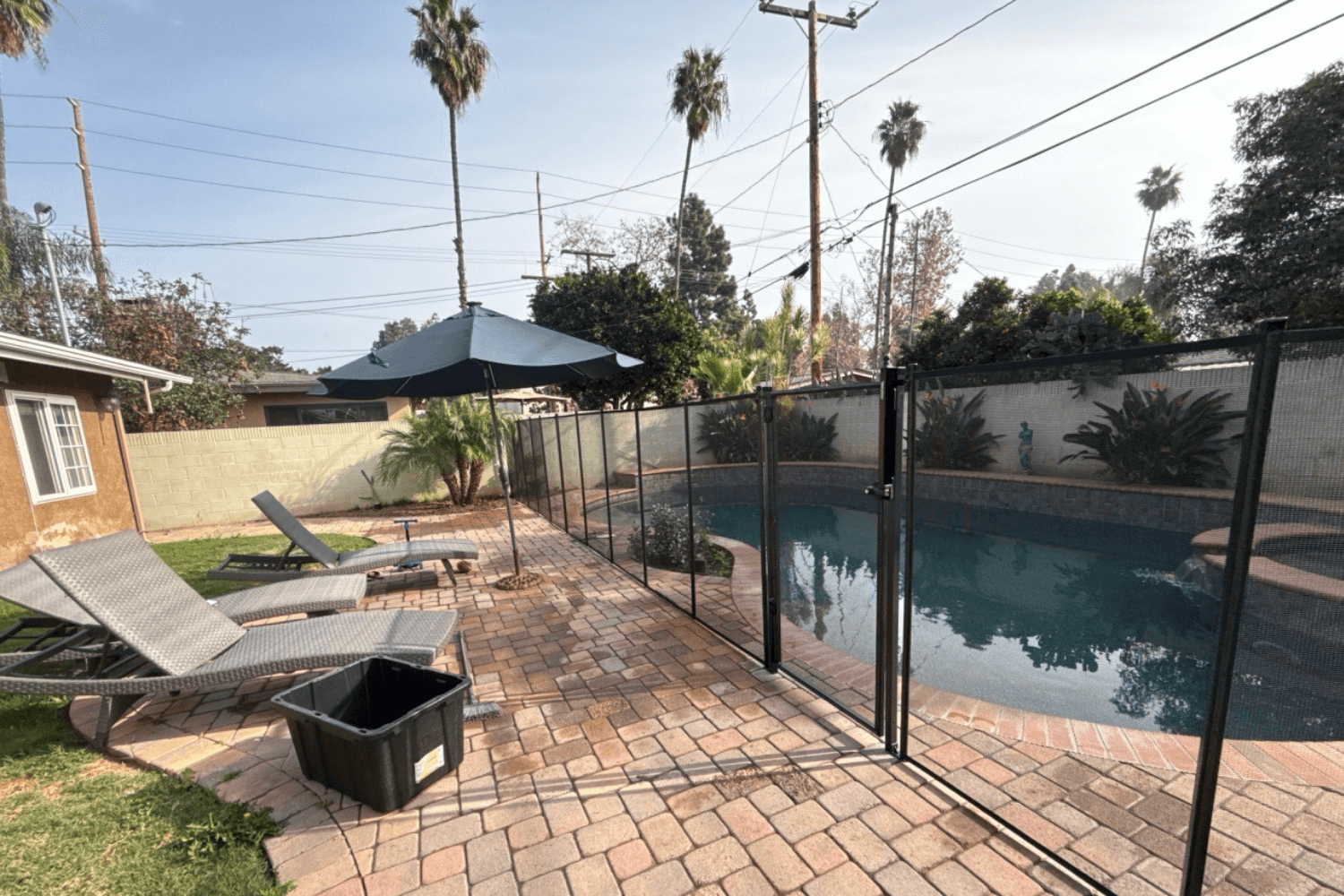
Pool Fence on Pavers: What to Know Before You Commit
Installing a pool fence on pavers can be a great solution, but pavers introduce one unique variable: movement. Pavers can settle over time, especially if the base was not properly compacted or if drainage causes shifting. That movement is not always visible until seasons change.
What typically goes well on pavers
Pavers tend to work best when they are level, stable, and installed correctly. When the base is strong and the pavers are not shifting, homeowners often get a clean, finished look with a removable fence.
What can cause problems
Issues usually happen when the pavers are not stable. Watch for these warning signs:
Pavers that rock when you step on them
Visible gaps widening between pavers
Low spots where water collects after rain
Areas near the pool edge that have settled over time
If you notice any of those, it does not necessarily mean you cannot install a pool fence. It means you should address the surface stability first or plan the layout to avoid the most unstable areas.
Planning Tips For Pavers
Think about placement the same way you would for furniture. Avoid sections that shift, and prioritize sections that feel solid underfoot. Also, think about how often the area gets wet and where runoff goes. Drainage issues that move pavers can also create long-term fence alignment issues.
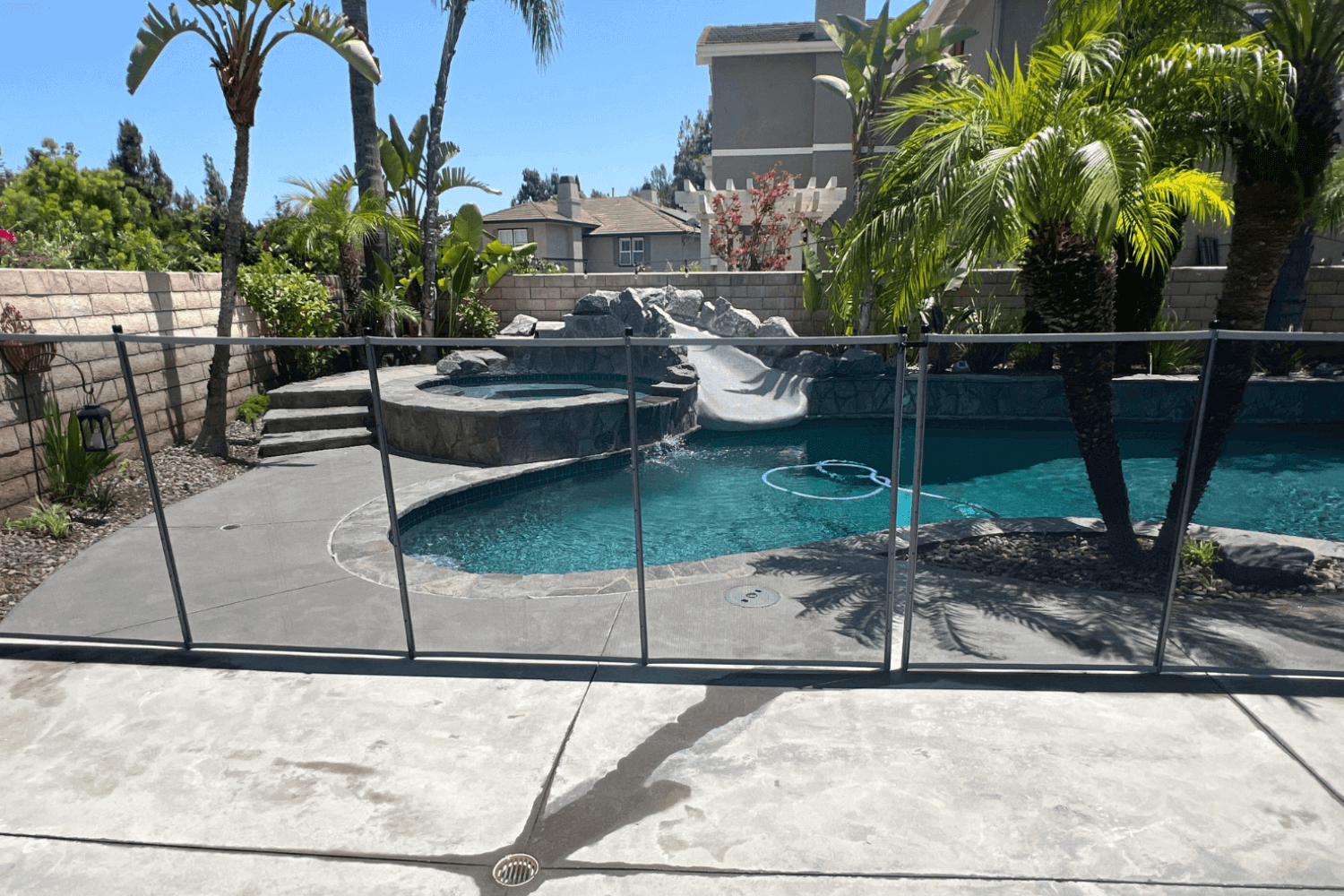
Pool Fence on Concrete: What Homeowners Overlook
Concrete is often the simplest surface to plan around because it is generally stable. That said, not all concrete is in good condition, and not all slabs behave the same.
Concrete Condition Matters More Than Age
Older concrete can be perfectly suitable if it is structurally sound. Newer concrete can still have issues if it is thin in certain areas, poorly reinforced, or already showing signs of cracking.
Before you plan a fence layout, check for:
Large cracks that continue to spread
Spalling or flaking near edges
Hollow-sounding areas that suggest voids underneath
Areas that slope toward the pool in a way that might affect anchor points
If your patio has existing damage, it is worth thinking about whether anchor placement should avoid those specific sections. The goal is to anchor into solid, stable concrete, not into the weakest area of the slab.
Don’t Ignore Joints and Seams
Many concrete patios include control joints or seams between pours. These are not automatically a problem, but they matter for planning. You want to avoid putting anchor points in areas where the slab is most likely to shift or where cracks commonly form.
Concrete is also common around curved pool decks, which can influence gate placement. Make sure your gate location supports a straight, consistent swing path so it closes and latches reliably.
Pool Fence on Wood Deck: the Key is Structure, Not Surface
With a pool fence on a wood deck, surface appearance is only part of the equation. What matters most is the structure underneath. A deck can look great while still having weakened framing, moisture damage, or flex that affects stability.
What to Check Before Planning a Pool Fence on a Wood Deck
Start with a basic stability check. Walk the perimeter where the fence would sit. Does the deck feel firm, or does it bounce and flex? A little movement can be normal, but excessive flex can create alignment issues over time.
Also look for signs of deterioration:
Soft spots or boards that feel spongy
Fasteners that are backing out
Areas where water sits after rain
Visible rot near posts or edge boards
If you suspect the deck is not structurally solid, address that first. The safest approach is always to anchor into a surface that can hold consistent tension and maintain alignment.
Planning Tips For Wood Decking
Decks tend to have rails, stairs, and transitions that affect fence layout. Plan the fence line to avoid creating awkward gaps near steps or rail posts. Also consider how traffic flows. Most homeowners want a gate near the most natural path, but the best gate location is the one that supports reliable closure and keeps the pool area secure.
Gate Placement: The Detail That Impacts Daily Safety
No matter what surface you are installing into, gate placement is one of the most important pre-install decisions. A fence can be stable and code-compliant, but a poorly placed gate can create daily frustration. It can also lead to habits that reduce safety, like propping the gate open.
When choosing a gate location, consider:
The most common walking path from the house to the pool area
Whether the surface is level enough for consistent swinging
Whether furniture or landscaping could block the swing path
Whether the gate location creates blind spots for supervision
The goal is a gate that closes easily, latches consistently, and fits the way people naturally move through the yard.
DIY vs Pro Install: How to Decide Without Overthinking It
You are comfortable measuring carefully and following instructions
Professional help may be worth it if:
Your pavers shift, or your deck has structural concerns
Your pool perimeter includes slopes or tight angles
You want the fence installed quickly with minimal trial and error
This is not about skill alone. It is about reducing risk and avoiding rework.
A Quick Pre-Install Checklist Before You Move Forward
Before you order or install, confirm these basics:
You know your surface type and its condition
You’ve identified any problem areas to avoid
You’ve planned a gate location that supports daily use
You understand local safety requirements in your area
You are ready to follow the correct installation guide for your surface
Once those boxes are checked, you are in a much better position to get a clean, stable result.
Ready to Take the Next Step?
If your surface is stable and your layout is planned, you’re in a great position to move forward with confidence. The key is to use the right installation approach for the material you’re anchoring into, so your fence stays secure and your gate performs reliably. Explore DIY pool fence installation options, or reach out to your local professional installer to schedule your installation!
Mesh removable pool fencing is a flexible, affordable way to add boundaries to pickleball courts. It keeps balls contained, looks clean, and can be removed when needed.
Need a flexible pool barrier for guests, projects, or short-term safety? This guide explains when temporary pool fencing works best and what to consider when choosing a removable pool fence that stays secure in daily use.
Supervision matters, but it is not a system. Learn why a pool fence helps prevent unsupervised access, where supervision breaks down in real life, and what to do next once you decide a barrier is right for your home.