Before Closing Day: How to Tell If Your Pool Cover Is Ready for Another Winter
A pool safety cover does a lot of work during the off-season. It helps protect the water from debris, supports a safer backyard when the pool is closed, and reduces the cleanup waiting for you in spring. But it can only do those jobs well if the cover, straps, springs, anchors, and surrounding deck are all ready for another season.
The mistake many homeowners make is waiting until the day they plan to close the pool to pull out the cover and see what condition it is in. That is when a small tear, damaged spring, missing anchor, or fit issue turns into a last-minute problem, often right when schedules are filling up and weather is becoming less predictable.
A better approach is to inspect your cover before closing day. That gives you time to determine whether it needs a simple repair, replacement hardware, professional attention, or a new custom-fit cover altogether.
Start With One Important Question: Is It a Safety Cover?
Before inspecting condition, confirm what type of cover you own and what job it is meant to do.
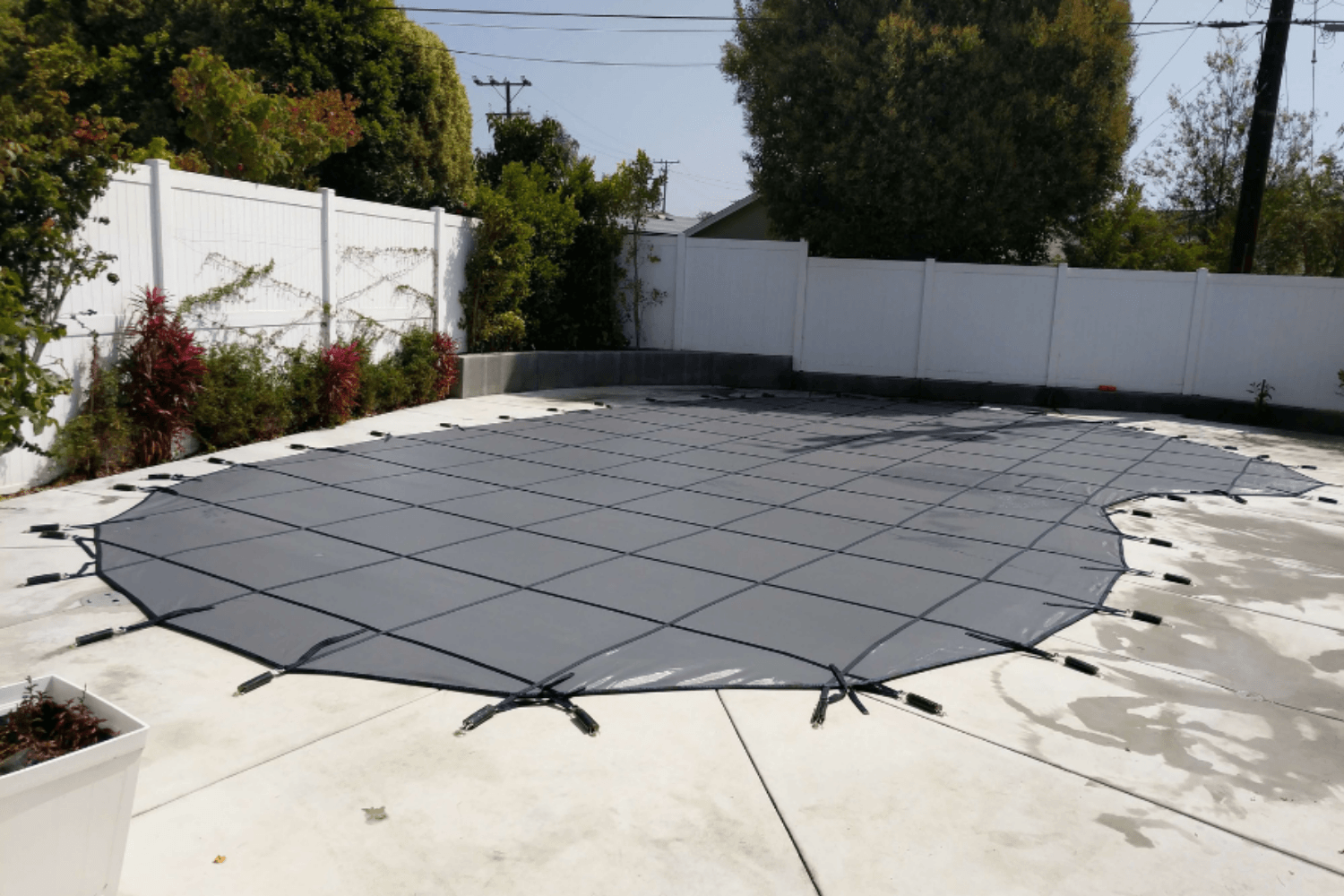
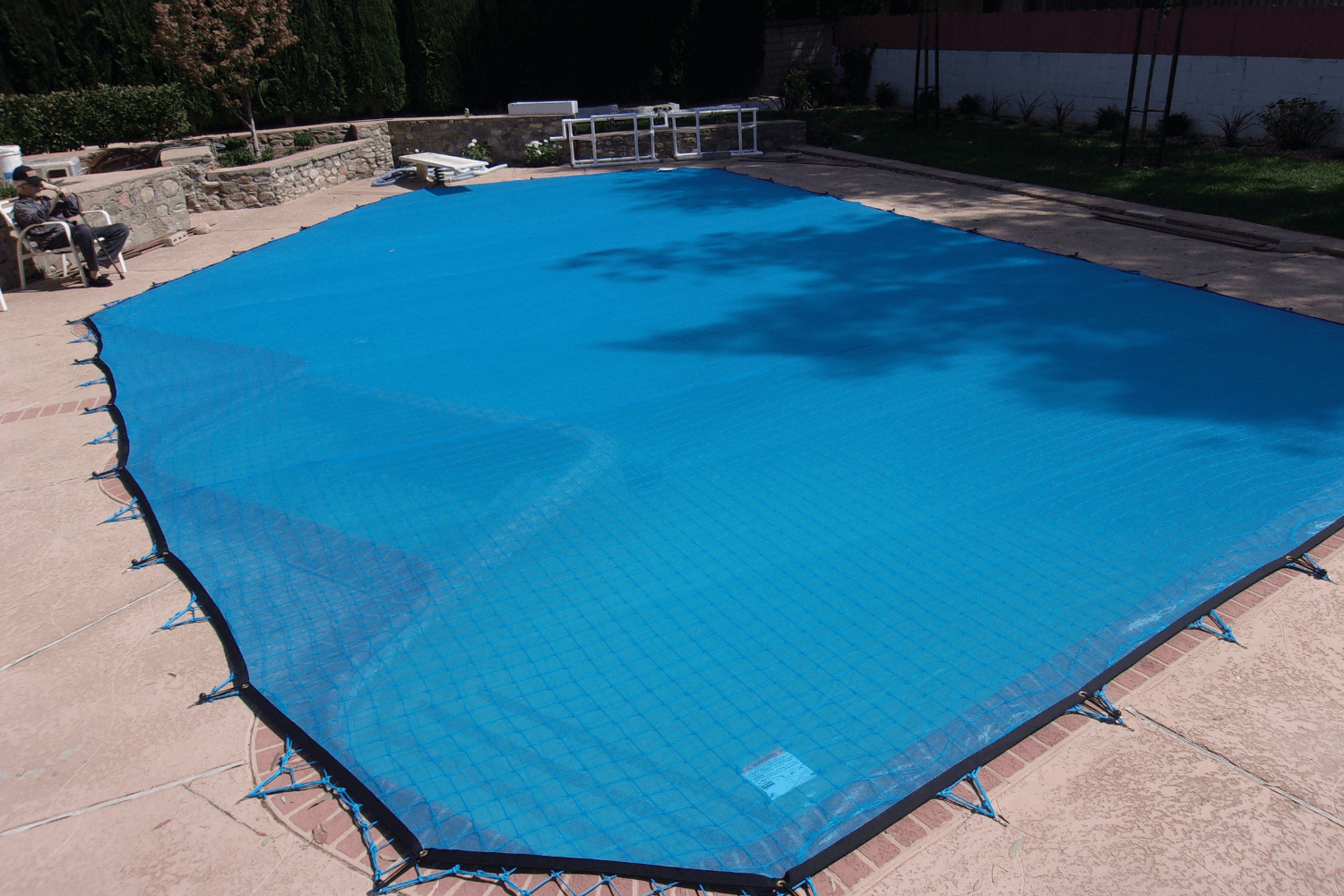
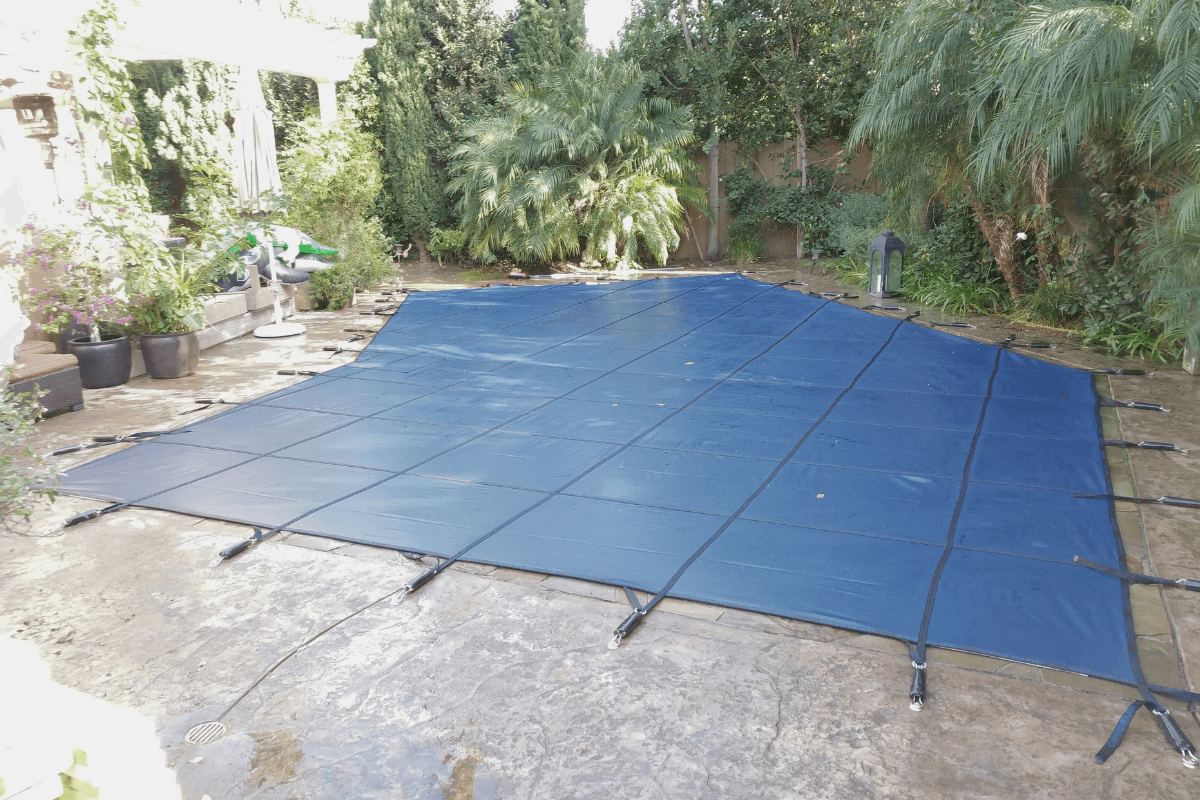
A true winter safety cover is designed to secure across the pool using a system of straps, springs, and deck anchors. All-Safe®’s custom-fit mesh and solid safety covers use these components to create a taut, durable surface that helps prevent accidental access by children and pets while the pool is closed.
A leaf cover serves a different purpose. It can reduce the amount of leaves and debris that enter the pool, but it is not a standalone safety barrier. All-Safe® recommends using a leaf cover only in conjunction with an appropriate safety barrier, such as a pool safety net.
If you are not sure whether your current cover is rated and installed as a safety cover, do not assume it can provide safety protection just because it covers the water. Check the manufacturer information or contact a pool safety professional before relying on it as part of your off-season plan.
Inspect the Cover Material in Good Light
Spread the cover out or inspect it carefully while it is still installed in a clean, well-lit area. Start with the material itself before moving to straps and hardware.
Look for:
Fraying or thinning fabric. Pay close attention to edges, corners, and high-contact areas where material rubs against coping, deck features, or hardware.
Tears, holes, or separated seams. Even a small opening can worsen under wind, rain, snow, debris weight, or repeated tension.
Sun damage or brittleness. If mesh or solid material feels unusually stiff, brittle, faded, or weak compared with past seasons, it may be nearing the end of its useful life.
Staining or embedded debris. Leaves, dirt, and organic material left on a cover can make it harder to spot damage and may contribute to premature wear.
Signs of sagging or uneven stress. A cover does not need to be installed to reveal every problem; look for areas that have stretched, distorted, or no longer lie evenly when unfolded.
All-Safe®’s cover storage guidance recommends examining the cover for small holes or tears while it is clean and dry, then making needed repairs before storage or the next season of use. The same principle applies before winter: catch small problems while they are still manageable.
Check Every Strap, Not Just the Obvious Ones
A cover’s fabric gets most of the attention, but straps distribute tension across the pool and play a major role in keeping the cover secure. One worn or twisted strap can affect how the entire system sits.
Inspect each strap for:
Fraying, cuts, or worn stitching.
Stretching that makes one section noticeably looser than the others.
Twists that prevent the strap from lying flat.
Discoloration, stiffness, or visible weakening.
Buckles or adjustment hardware that no longer holds the strap securely.
It is especially important to compare straps across the cover. If one side consistently looks loose or pulled harder than the rest, there may be an adjustment issue, a stretched strap, or a hardware problem at the anchor point.
Winter safety covers gain their secure fit through straps and springs anchored around the pool deck. That means the cover is only as dependable as the system working beneath it, not just the fabric across the water.
Test Springs, Clips, and Connection Hardware
Springs absorb and distribute tension between the cover straps and the anchors. Over time, they can corrode, stretch, deform, or become harder to connect correctly.
Before closing, inspect for:
Rust, corrosion, cracks, or bent coils.
Springs that look noticeably more stretched or compressed than neighboring springs.
Damaged clips, loops, buckles, or connection points.
Hardware that catches, slips, or does not sit securely.
Missing components from past removal or storage.
Be sure to check net and cover anchors, straps, and clips for stability, damage, and deformation, and addressing any damage promptly with appropriate replacement parts or professional assistance.
Do not try to “make it work” with improvised hooks, rope, or mismatched hardware. A winter safety cover is a tensioned system, and an improvised fix can alter how force is distributed across the cover and deck.
Inspect the Anchors and the Deck Around Them
Your safety cover attaches to anchors in the deck, so the inspection should extend beyond the cover itself.
Check for:
Anchors that are loose, damaged, stuck, missing, or difficult to raise and lower.
Cracked or chipped deck material around an anchor.
Corrosion or debris inside anchor openings.
Changes to the deck since last winter, such as resurfacing, repairs, paver movement, settling, or newly installed features.
Furniture, planters, equipment, or landscaping that now interferes with where straps need to run.
All-Safe®’s custom-fit covers rely on anchors, straps, and springs to create a tight surface, while its winter-cover tools are designed to help secure or remove cover springs and adjust threaded brass anchors. If an anchor is not functioning correctly, the answer may be more involved than replacing a strap.
This is also why it helps to inspect early: deck repairs, anchor work, or custom-cover adjustments may take more planning than a quick closing-day fix.
Compare This Year’s Fit With Last Year’s Fit
Even if nothing looks visibly broken, pause and think about how the cover performed last winter.
Ask yourself:
Did the cover stay taut, or did it sag in a particular area?
Did straps repeatedly loosen or require unusual adjustment?
Did leaves and debris collect heavily in one section?
Did water drain through mesh as expected, or did you notice pooling or stress points?
Did a spring detach, an anchor stick, or a strap slip?
Did the cover seem harder to install or remove than in previous years?
A cover does not have to rip dramatically to signal that something is changing. A gradual decline in fit, tension, or ease of use can be an early warning that hardware, fabric, or the pool deck itself needs attention.
Your pool’s surroundings matter, too. Tree growth, new landscaping, patio furniture, a resurfaced deck, or a backyard addition can change debris patterns and access around the cover. Those changes may not mean you need a new cover, but they are worth considering before you assume last year’s setup will perform exactly the same way.
Know When to Repair, Replace, or Call a Professional
Not every issue requires a brand-new cover. The important thing is to match the response to the problem.
What you find
A reasonable next step
Light debris, surface dirt, or minor strap adjustment needs
Clean the cover and make manufacturer-approved adjustments before installation
A small hole, tear, or isolated worn area
Ask about a professional repair or an appropriate patch solution before relying on the cover for the season
Missing clips, damaged springs, worn straps, or anchor trouble
Order compatible replacement hardware or contact a pool safety professional for guidance
Multiple weak areas, widespread fabric wear, repeated sagging, or an unreliable fit
Start planning for a replacement custom-fit safety cover
Cracked deck areas, loose anchors, major installation difficulties, or uncertainty about the cover’s safety rating
Schedule a professional assessment before closing
If your cover has reached the point where you are questioning whether it will hold up through another winter, do not wait for the first storm to answer that question.
Make a Pre-Closing Plan Now
A cover inspection works best when you do it before the pool is fully winterized and before your preferred closing date is locked in. Give yourself time to clean, inspect, photograph concerns, order parts, and get help if needed.
A simple pre-closing plan can look like this:
Pull out and clean the cover in a dry, well-lit space.
Inspect mesh or solid material, seams, straps, springs, clips, and anchors.
Note any concerns with photos, especially wear, tears, corrosion, or deck damage.
Decide whether the cover needs cleaning, repair, replacement hardware, or replacement.
Confirm you have the right cover tools and installation support before closing day arrives.
Your pool cover should not be the last item you think about when closing the pool. Inspecting it early is one of the simplest ways to protect your investment, avoid rushed decisions, and enter winter with a pool that is properly covered, not just covered up.
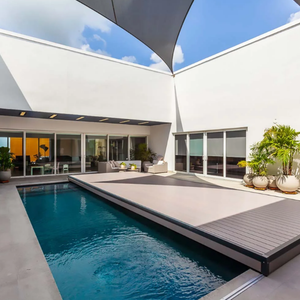
A sliding deck pool cover does more than protect the water. When closed, it can conceal the pool and turn its footprint into usable outdoor space for relaxing, entertaining, and everyday backyard living. Learn whether this custom solution may be right for your pool project.
A winter cover protects the water, but a pool fence controls access to the entire pool area. Learn why removable mesh fencing can still play an important role after your pool is closed, and when seasonal removal may make sense.
“Covered” can mean very different things for your pool and backyard. Learn how safety nets, leaf covers, winter safety covers, automatic covers, and sliding deck systems affect access, safety, maintenance, and how you can use the space around, and above, your pool.