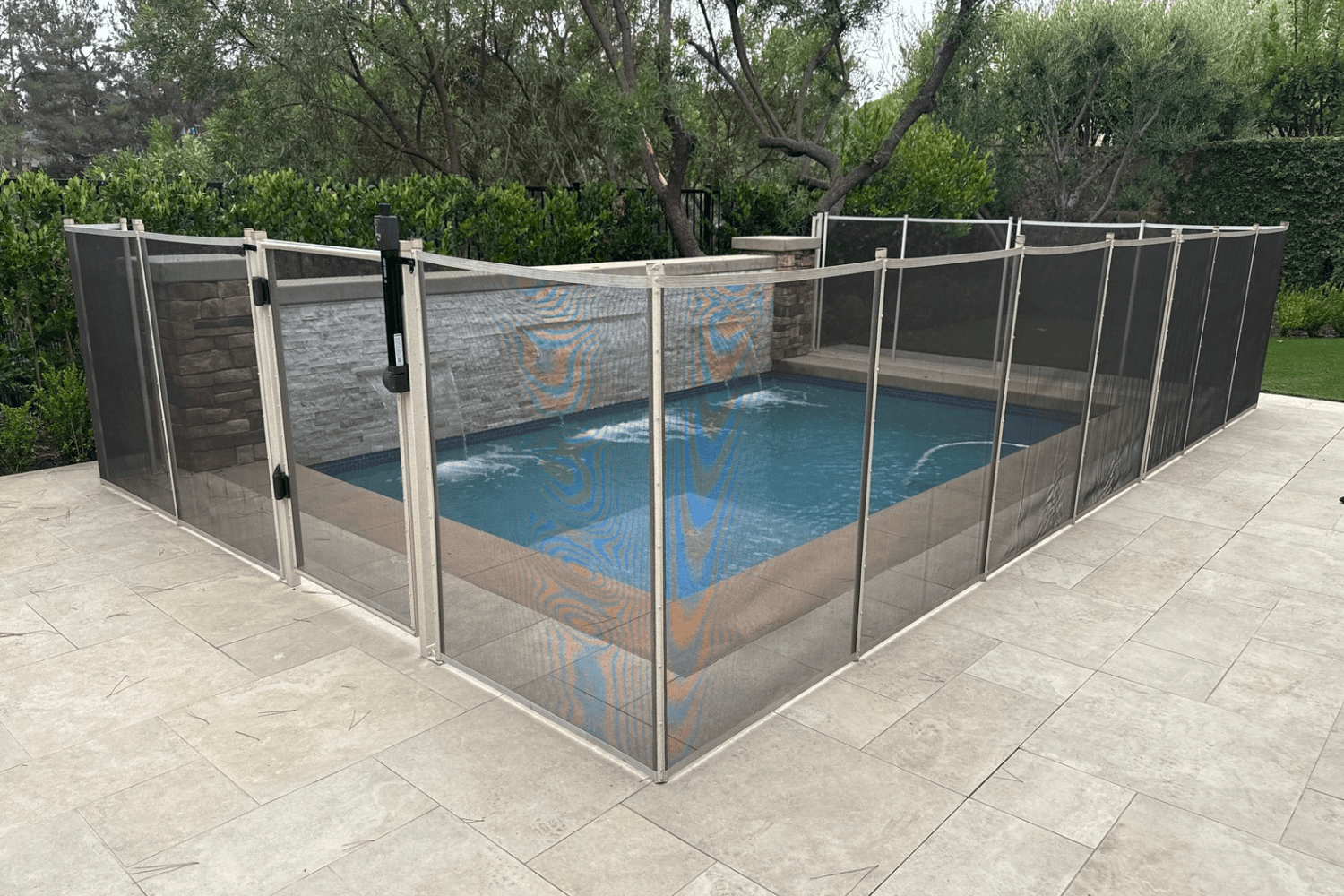
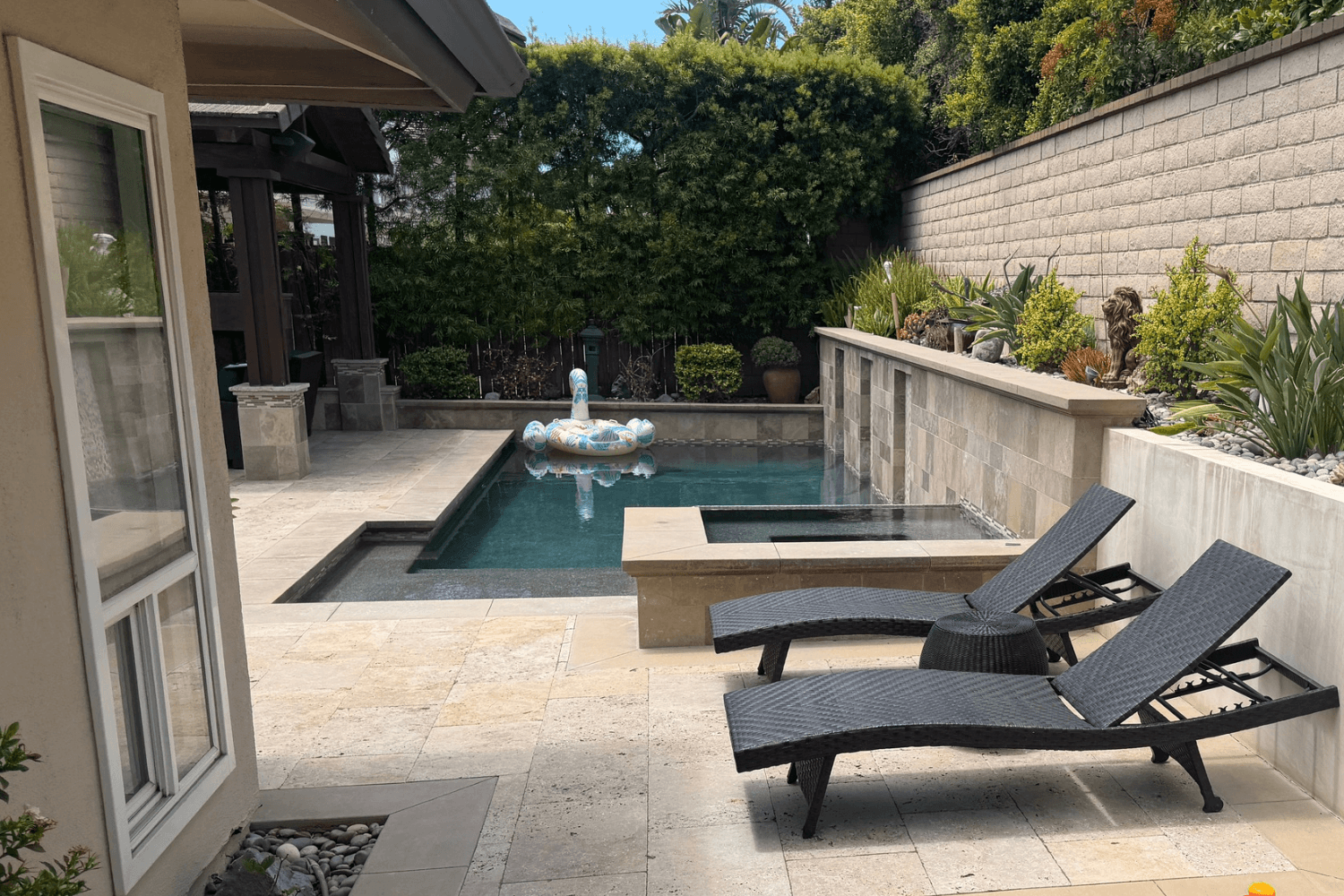
Small Pool, Same Safety Stakes: Planning Protection for Plunge and Cocktail Pools
A plunge pool beside the patio. A cocktail pool tucked into a courtyard. A compact swimming area that leaves room for dining, landscaping, and outdoor living.
A smaller pool can be an appealing way to bring water into a backyard without making it the yard’s only feature. But when you are planning the layout, the water’s edge is not the only boundary worth considering. You also need to decide how people will reach the pool, and how you will limit access when no one is swimming.
The essential safety question is not how many laps someone can swim. It is whether a child could reach the water without a supervising adult. The American Academy of Pediatrics identifies unexpected, unsupervised access to water as the biggest drowning threat for families with toddlers.
At All-Safe®, we help homeowners think through the physical protection around their pools. For a plunge or cocktail pool, that conversation belongs early in the design process, alongside the pool’s placement, decking, and surrounding outdoor space.
A Smaller Footprint Does Not Make a Pool Child-Safe
Whatever name appears on the design proposal, assess the actual pool: its depth, entry points, surrounding surfaces, and connection to the home.
A pool does not need to be large or deep to pose a drowning hazard. Young children can drown in just an inch or two of water, and an incident can happen quickly and silently. A shallow section or compact layout therefore does not remove the need for barriers and attentive supervision.
Likewise, being able to see the entire pool from a kitchen window or patio chair is not the same as actively supervising it. AAP guidance calls for constant attention without distractions; infants, toddlers, and weak swimmers need an adult with swimming skills within arm’s reach.
The planning principle is simple: reduce the pool’s dimensions if that suits your space, but do not reduce the attention given to access.
Plan the Protected Area Before Finalizing the Patio
When space is limited, every part of the backyard has to work harder. The same area may need to accommodate a pool, dining furniture, a walkway, and the route between the house and garden.
Before signing off on the layout, ask your designer or installer to show:
Where the pool barrier will go.
How people will enter and exit the protected area.
Where a gate can open and close without obstruction.
How the barrier will meet nearby walls or other boundaries.
Whether furniture and landscaping will remain clear of the barrier.
How any proposed net or cover will be installed, removed, and stored.
These are planning questions rather than universal specifications. The right arrangement depends on the property, the selected product, and applicable local requirements.
Putting the barrier on the drawing now gives you an opportunity to resolve conflicts before the decking and landscaping are finished. It also helps you judge the usable outdoor space realistically: the pool’s footprint and the space needed to protect it are not necessarily the same.
Follow the Route From the House to the Water
A compact pool may sit close to the rooms and outdoor areas your family uses most. Trace the route from those spaces to the water.
Could a child step through a patio door and reach the pool? Does a side-yard gate lead directly into the pool area? Would someone crossing the backyard need to pass through a pool gate?
The AAP recommends a four-sided isolation fence that separates the pool from both the house and the rest of the yard. A fence around the property boundary is not the same thing: a child who is already inside the yard may still have direct access to the water.
For a small backyard, the distinction matters. Enclosing the entire outdoor area may feel efficient, but it does not necessarily create a separate protected pool area.
Leave room for a working gate
A gate should fit the way people move through the yard without becoming something they routinely prop open.
CPSC recommends pool gates that are self-closing, self-latching, and open away from the pool. The gate and its surroundings need to support that function, rather than interfere with it.
During layout planning, consider where chairs, planters, and outdoor equipment will sit when the yard is actually being used, not just when it is empty for installation.
Keep climbable objects away from the barrier
A tight layout can tempt homeowners to place seating or storage directly beside a fence. But nearby furniture and play equipment can give children a way to climb over it. AAP guidance specifically advises keeping such objects away from pool fencing.
Show those items on the plan, too. A barrier should not depend on keeping an otherwise impractical strip of the yard permanently empty.
Choose Protection Around How You Will Use the Pool
A small pool still offers several possible approaches to physical protection. All-Safe offers removable mesh pool fencing, pool safety nets, and covers, but suitability needs to be assessed for the individual installation.
The useful starting point is the difference between protection around the pool and protection over the water.
Planning question
Why it matters
Do you want the water available while a perimeter barrier remains in place?
A pool fence separates the surrounding space from the pool area.
Do you prefer an over-water product when the pool is not in use?
A net or cover must be removed for swimming and properly secured afterward.
How frequently will you use the pool?
The removal and replacement routine should be part of your decision.
What surrounds the pool?
Decking, walls, steps, and other features need to be evaluated for the proposed installation.
What does the local authority require?
Product selection does not, by itself, establish compliance.
Rather than choosing solely on appearance, ask the installer to walk you through a normal use cycle: opening the pool, supervising swimming, closing it, and checking that the protection is secure again.
Do not assume every cover is a safety cover
A product that covers the water is not automatically designed to prevent a child from entering it.
The AAP specifically warns that floating solar covers are not safety covers. It also advises that pool covers must secure the entire pool so a child cannot slip underneath, and that standing water must not collect on top.
If your pool proposal includes a cover, ask what type it is, what safety function it is designed to provide, and what installation and operating requirements apply. Do not rely on “cover included” as a complete answer.
Check Local Requirements Without Relying on the Pool’s Name
“Plunge pool” and “cocktail pool” describe the project you want, but they should not be treated as proof of an exemption from pool-barrier requirements.
Before construction, confirm with the local building department:
How the proposed pool is classified.
Which permits and inspections are required.
What barrier, gate, and alarm rules apply.
Whether the proposed net or cover is accepted as part of the required protection.
Whether additional requirements apply to doors or windows facing the pool.
CPSC recommends a fence at least four feet high around a pool or spa, with self-closing, self-latching gates. That is safety guidance, not a substitute for checking the rules governing your property.
Ask the pool builder and barrier installer to coordinate their plans. A product can be appropriate for a particular installation without being sufficient, on its own, to satisfy every local requirement.
Keep the Swim-Time Plan Separate From the Barrier Plan
Physical protection addresses access when the pool is not being used. It does not replace supervision once people enter the pool area.
During swimming, assign an adult who is actively watching children rather than assuming everyone nearby is sharing the job. That adult should avoid distractions, including phone use, household tasks, and alcohol. For infants and toddlers, the AAP recommends being in the water within arm’s reach.
Small pools also need clear entry rules. A short distance across the water does not mean the depth is suitable for diving. AAP guidance warns against diving into shallow water because of the risk of serious head and spinal injuries.
Before the pool is used, establish rules based on its actual design, not on how familiar or manageable it feels.
Questions to Settle Before Construction Starts
Bring these questions to your pool designer and safety-product installer:
Can the pool be separated from the house and the rest of the yard?
Where will the gate go, and will its swing remain clear during everyday use?
Will furniture or landscaping create climbing opportunities beside the barrier?
Is the proposed surface suitable for the selected barrier’s installation?
If choosing a net or cover, where will it be stored during swimming?
Can everyone responsible for closing the pool operate the product correctly?
What local approvals and inspections are needed?
What protection will remain in place between the pool becoming accessible and the permanent barrier being completed?
The goal is not to make a small-pool project complicated. It is to resolve safety decisions while you still have flexibility in the design.
Make Protection Part of the Pool You Want
A well-planned plunge or cocktail pool should work with the way you want to enjoy your backyard. Its protection should be part of that plan from the beginning, not an awkward addition after every other inch has been assigned.
At All-Safe®, we can help you explore removable mesh fencing, pool safety nets, and cover options for your proposed layout. Our role is to help address physical access to the water as part of a broader safety plan that also includes supervision and emergency readiness.
Request an installation quote while you are planning the pool, and bring the layout into the conversation. A compact footprint is a design choice, not a reason to leave protection out.
Water safety matters even when no one plans to swim. For families of children who wander, preparation should extend beyond the backyard pool. Learn how to assess access to water, coordinate with neighbors, and build an individualized plan with your child’s care team.
A tanning ledge can be an inviting place for family pool time, but shallow water does not make it an independent play area. Learn how to approach supervision, deeper-water transitions, furniture placement, and protection for Baja shelves and sun shelves.
A sliding deck pool cover does more than protect the water. When closed, it can conceal the pool and turn its footprint into usable outdoor space for relaxing, entertaining, and everyday backyard living. Learn whether this custom solution may be right for your pool project.