Pool Safety for Children Who Wander: Planning Beyond Swim Time
Most families think about pool safety when swimming is on the schedule. But for a child who wanders away from a safe setting, an encounter with water may happen during an ordinary afternoon, an overnight visit, or a moment when everyone assumes the pool is off-limits.
Wandering, sometimes called elopement, means leaving a supervised or safe setting in a way that can put someone at risk. It can affect autistic children and children with other developmental conditions, although not every child wanders or has the same reasons for doing so. Some may move toward something that interests them, including water. Others may leave an environment that feels stressful or overwhelming.
At All-Safe®, we believe pool safety planning should account for those individual circumstances, not just what happens during supervised swimming. For families managing wandering, that means looking at how a child could reach water, what protections stand in the way, and how the people around them would respond if they went missing.
Start With Your Child, Not a Generic Checklist
An effective wandering-prevention plan begins with understanding the individual child. An attraction to water, difficulty communicating, sensitivity to noise, or a change in routine may influence what support is useful. Those needs can also change over time.
The American Academy of Pediatrics recommends identifying possible wandering triggers and discussing a family wandering emergency plan with your child’s pediatrician. Your child’s care team can help you consider communication strategies, environmental supports, and local resources suited to your situation.
Useful questions to discuss include:
Has your child previously left the house, yard, classroom, or another supervised setting?
Do they move toward particular places, sounds, or activities?
Are there situations in which they try to leave because they feel overwhelmed?
How do they communicate when distressed or approached by someone unfamiliar?
Have they recently learned to operate a door, lock, or gate that previously limited access?
The purpose is not to label every behavior as a danger. It is to understand where additional support may be needed, and avoid relying on assumptions about what a child can or cannot do.
Look Beyond Your Own Pool
A family does not need to own a pool for water access to be a concern.
A neighboring backyard, community pond, drainage area, lake, or other nearby water feature may become relevant if a child leaves home. A secure family pool is an important part of the picture, but it cannot address water elsewhere in the neighborhood.
The AAP recommends that families of children who wander identify nearby ponds, lakes, and pools as part of their emergency planning.
Build that awareness into your plan:
Identify nearby bodies of water and pools you know about.
Note routes your child has taken before or places they frequently try to visit.
Include water near homes your child visits regularly, not just your primary residence.
Keep this information with your family’s emergency details.
This is different from creating a detailed search plan on your own. It gives your pediatrician, caregivers, and emergency responders relevant information to work with if an incident occurs.
Separate Leaving the House From Reaching the Water
At home, two separate access questions deserve attention:
Could your child leave the supervised living area without an adult noticing?
If they reached the backyard, could they reach the pool?
Securing an exterior door addresses the first question. A pool safety fence around the pool addresses the second. Neither should be assumed to do the other’s job.
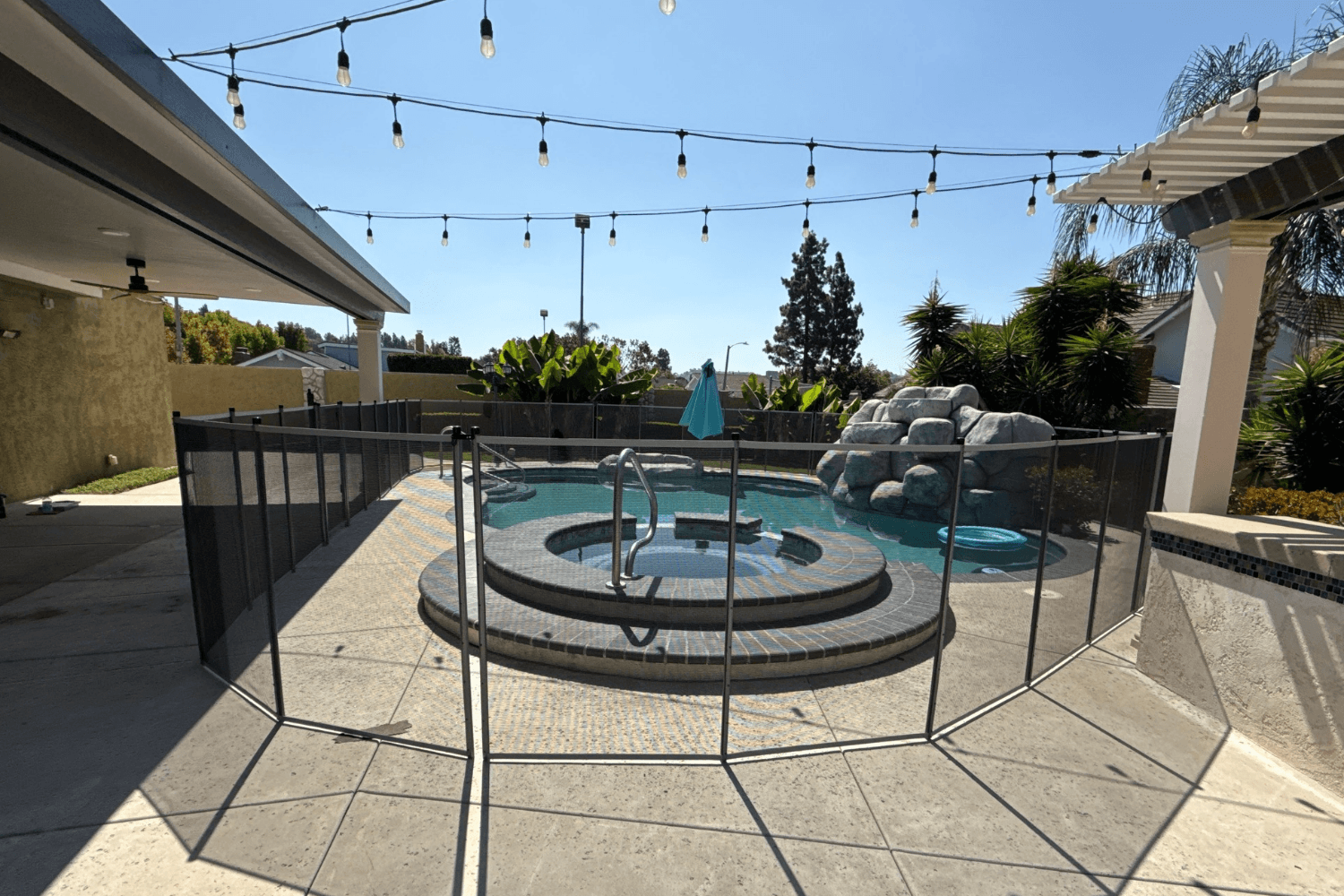
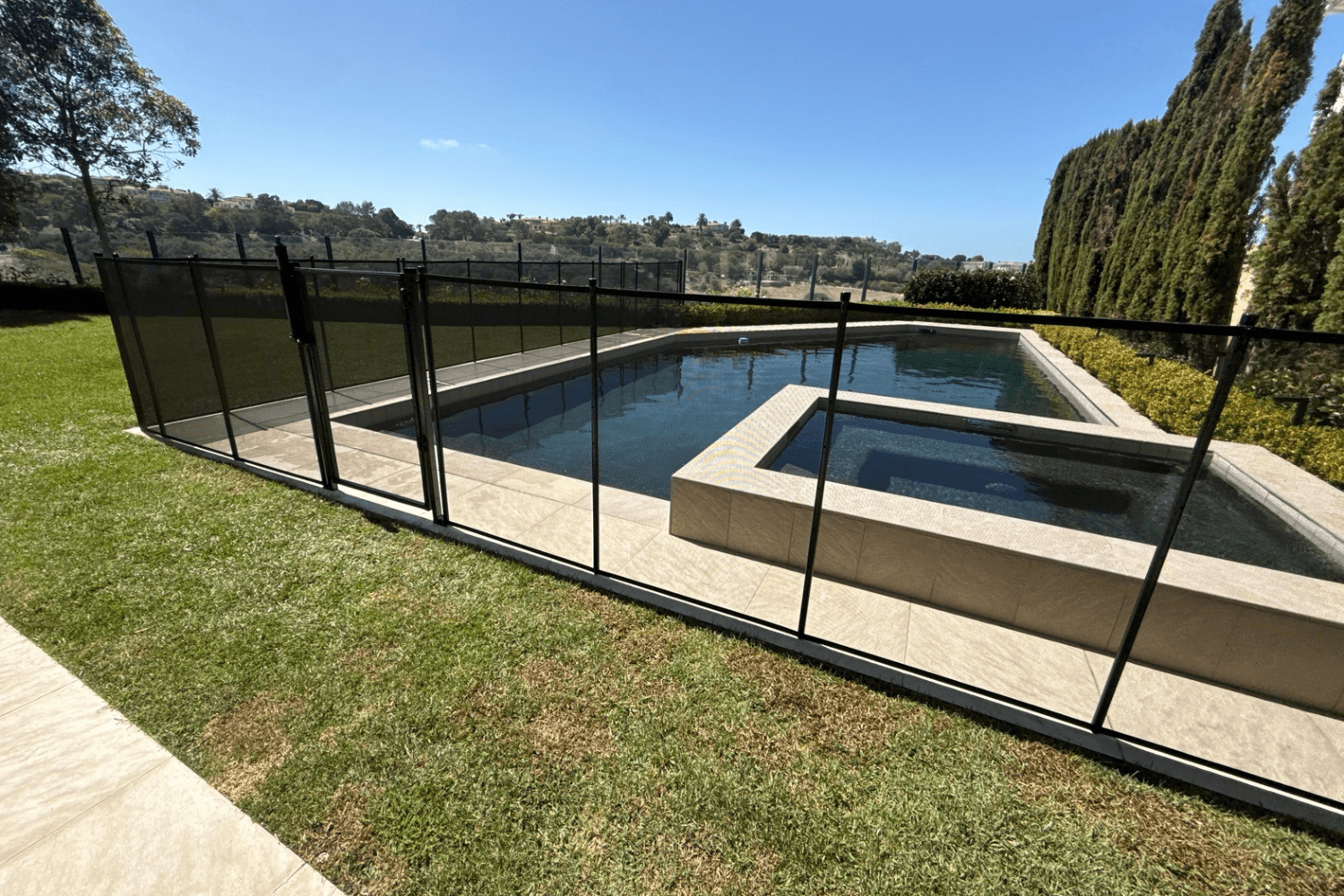
For autistic children, AAP guidance recommends four-sided pool fencing that completely separates the water from the house and the rest of the yard, with a self-closing, self-latching gate. It also recommends securing pool-access doors and gates and considering pool alarms.
An existing property fence may help control access to the yard, but it does not necessarily separate a child who is already inside that yard from the pool. When we help families consider a pool barrier, that house-to-water route is an important part of the conversation.
Match protection to current abilities
A latch or door handle that a child could not operate last year may no longer be out of reach or unfamiliar. The AAP advises securing the home regardless of the child’s age, rather than treating wandering protection as something only young children need.
Revisit the plan when your child develops new skills or when the home changes. If door locks or other security measures need modifying, consult appropriate professionals so the changes also preserve emergency escape and comply with applicable requirements.
Understand what alarms can, and cannot, do
An alarm can alert an adult that a door or gate has opened. It does not physically prevent the opening, and someone must be able to hear and respond to it.
AAP and NDPA guidance includes alarms alongside physical barriers and supervision, not as a substitute for them.
For families managing wandering, the useful question is not simply, “Do we have an alarm?” It is, “Who receives the alert, and what happens next?”
Bring Trusted Neighbors Into the Conversation
When appropriate, a brief conversation with trusted neighbors can extend awareness beyond your property.
NDPA recommends informing neighbors about a family member’s wandering and providing contact information in case they encounter that person without a companion.
You can decide what information you are comfortable sharing. Relevant details may include:
Your child’s name and a current photo.
How they may communicate or respond to an unfamiliar adult.
Your contact information.
Known places or water features they may approach.
The importance of treating an unexplained absence as urgent.
If a trusted neighbor has a pool, ask about its access points and barriers rather than assuming the water is inaccessible. The goal is not to transfer responsibility for your child to the neighborhood. It is to help people recognize a concerning situation and respond promptly.
Swimming Skills Do Not Resolve Wandering Risk
Swimming instruction can help children develop valuable water skills. A program that understands your child’s communication, learning, and sensory needs may make instruction more accessible and productive. AAP guidance recommends tailored lessons for autistic children while emphasizing continued supervision.
But learning to swim and avoiding unsupervised access are different goals.
A child may be comfortable in water and still approach it without an adult. They may also encounter a pool, water depth, entry point, or environment that differs from the setting in which they learned.
The AAP explicitly cautions that swimming lessons alone are not enough to prevent drowning. Barriers and a family supervision plan remain important.
When evaluating lessons, discuss your child’s individual needs with the instructor. Ask how the program teaches water-safety awareness as well as swimming skills, and how families can reinforce learning without treating progress as permission to relax access protection.
Make the Emergency Plan Specific to Your Child
A wandering emergency plan should be prepared before anyone needs it.
Work with your pediatrician and relevant local resources to determine what information to keep ready, whom to contact, and how adults will coordinate. The AAP recommends a family wandering emergency plan and notes that identification and monitoring tools may be helpful for some children, particularly those who cannot reliably communicate their name, address, or phone number.
Information to discuss including:
Information
Why it matters
A current photo and identifying details
Helps others recognize your child
Communication needs
Helps responders understand how your child may express distress or respond to instructions
Known destinations and nearby water
Provides relevant location information
Medical information and emergency contacts
Supports an informed response
Details of any identification or tracking device
Helps adults understand what information is available, and its limitations
These resources support a response; they do not replace prevention or supervision.
If your child goes missing, call 911 immediately. Tell the dispatcher that your child is missing, explain any relevant communication or developmental needs, and identify nearby water hazards. Do not delay emergency notification while conducting a prolonged search yourself. Massachusetts’ autism and water-safety guidance specifically directs families to call 911 immediately when a child is missing.
Revisit the Plan When the Setting Changes
A plan that works at home may not address a grandparent’s backyard, a new neighborhood, or a different school routine.
Before spending time in another setting, identify how your child could leave the supervised area and what water is accessible nearby. AAP guidance recommends communicating plans in advance and clearly coordinating supervision between trusted adults.
The same principle applies when circumstances change at home: a newly accessible door, a different caregiver arrangement, or a change in your child’s interests may call for another conversation with their care team.
Preparation should support participation, not make water and outdoor activities feel permanently off-limits. The aim is to create conditions in which your child can enjoy those experiences with appropriate support.
Build Protection Around Real Access to Water
For children who wander, pool safety starts well before swim time. It includes understanding individual needs, limiting unsupervised access, recognizing nearby water hazards, and preparing the people who may need to respond.
Our role is to help you address the physical access to your pool. If you are evaluating a barrier, we can help you explore removable mesh pool fencing, self-closing gates, and other appropriate pool safety options for your property. Those products should form part of a broader, individualized plan developed with your child’s care team, not a promise that any single product can eliminate wandering or drowning risk.
A plunge or cocktail pool can fit a compact backyard, but its smaller footprint does not eliminate the need for protection. Learn what to consider before installation, from house-to-water access and fence placement to choosing a barrier that works with your space and routine.
A tanning ledge can be an inviting place for family pool time, but shallow water does not make it an independent play area. Learn how to approach supervision, deeper-water transitions, furniture placement, and protection for Baja shelves and sun shelves.
A sliding deck pool cover does more than protect the water. When closed, it can conceal the pool and turn its footprint into usable outdoor space for relaxing, entertaining, and everyday backyard living. Learn whether this custom solution may be right for your pool project.