Before You Leave: A Pool-Safety Walkthrough for Babysitters, Grandparents, and Caregivers
Leaving your child with someone you trust is one thing. Leaving them with someone you trust in a home with a pool is another.
A babysitter, grandparent, nanny, older sibling, neighbor, or houseguest may be wonderful with your children and still have no idea how your specific pool area works. They may not know which door leads directly to the backyard, whether the gate self-closes, where the alarm panel is, how the safety net attaches, or what your family means when you say the pool is “closed.”
That is why a written list of rules is helpful; but it is not enough on its own.
Before you leave a caregiver in charge, walk the property with them. Show them how your pool safety system works in real life, let them operate the gate and any alarms themselves, and make sure they know what to do if something does not go as expected. This five-to-ten-minute walkthrough helps turn your pool safety setup from a collection of products into a plan someone else can actually follow.
Why a Physical Walkthrough Matters
Every backyard is different. Even caregivers who have watched children around pools before may not know the layout, sightlines, barriers, or routines at your home.
A written house manual can say, “Keep the pool gate closed.” A walkthrough lets you show the caregiver:
Which gate you mean.
How it is supposed to self-close and latch.
What a properly latched gate looks and sounds like.
Which doors, windows, or pathways create direct access to the pool area.
Where your rescue equipment and phone are located.
What should happen at the end of the day before everyone goes inside.
Physical barriers, alarms, safety covers, and active supervision all play different roles in a layered pool safety plan. National water-safety guidance recommends combining these layers rather than depending on a single device or rule.
The walkthrough is what connects those layers for the person responsible while you are away.
Start at the Door a Child Would Use
Do not begin your walkthrough at the pool. Begin inside the house, at the doors or windows that give children the most direct access to the backyard.
Show the caregiver:
Which doors open toward the pool area.
Whether those doors have alarms, locks, chimes, or additional safety devices.
What the alarm sounds like and how to test it, if appropriate.
Where keys, remotes, or alarm controls are stored; and why they should remain out of children’s reach.
Which doors should stay closed and secured when the pool is not actively being used.
This part of the walkthrough is easy to skip because it is not technically “at the pool.” But pool-access doors are often where an unsupervised entry begins.
The U.S. Consumer Product Safety Commission identifies barriers, covers, alarms, and self-closing, self-latching gates as important layers that help prevent unsupervised access to pools and spas.
Walk the Normal Route to the Pool Area
Next, take the exact route someone would use to get from the house to the pool. This is the time to point out anything a caregiver could miss on their own.
Talk through:
The main path children usually take into the yard.
Any steps, uneven surfaces, or tight areas near the pool fence.
Outdoor furniture, storage, planters, or toys that should not be moved close to the barrier.
Areas where a child could be difficult to see from the patio, kitchen, or seating area.
Any feature that changes with the season, such as a removable ladder, temporary gate section, pool net, or cover.
The purpose is not to overwhelm the caregiver. It is to eliminate assumptions. If your family has a particular route, routine, or backyard quirk, they should know it before they are managing children on their own.
Let Them Test the Gate Themselves
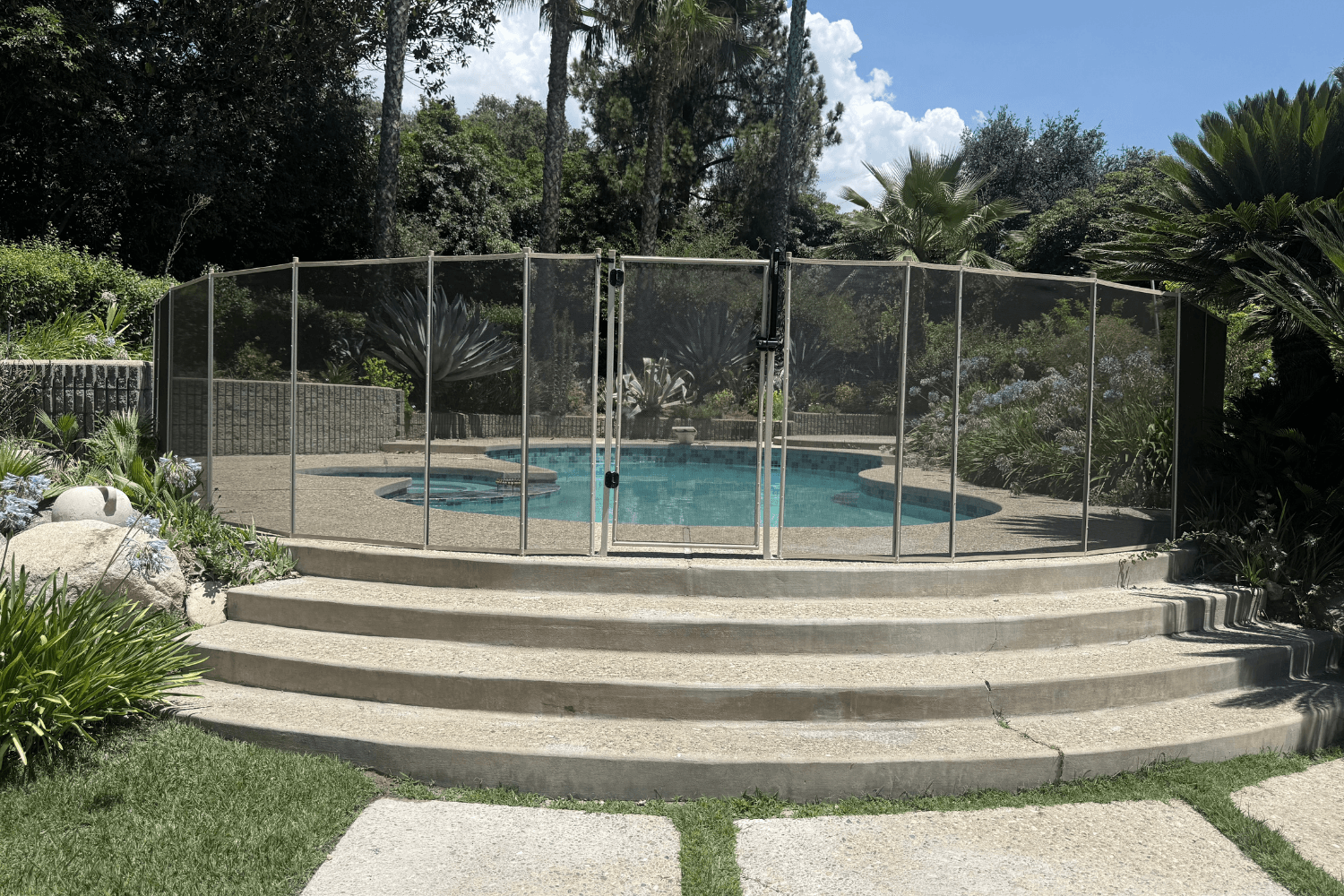
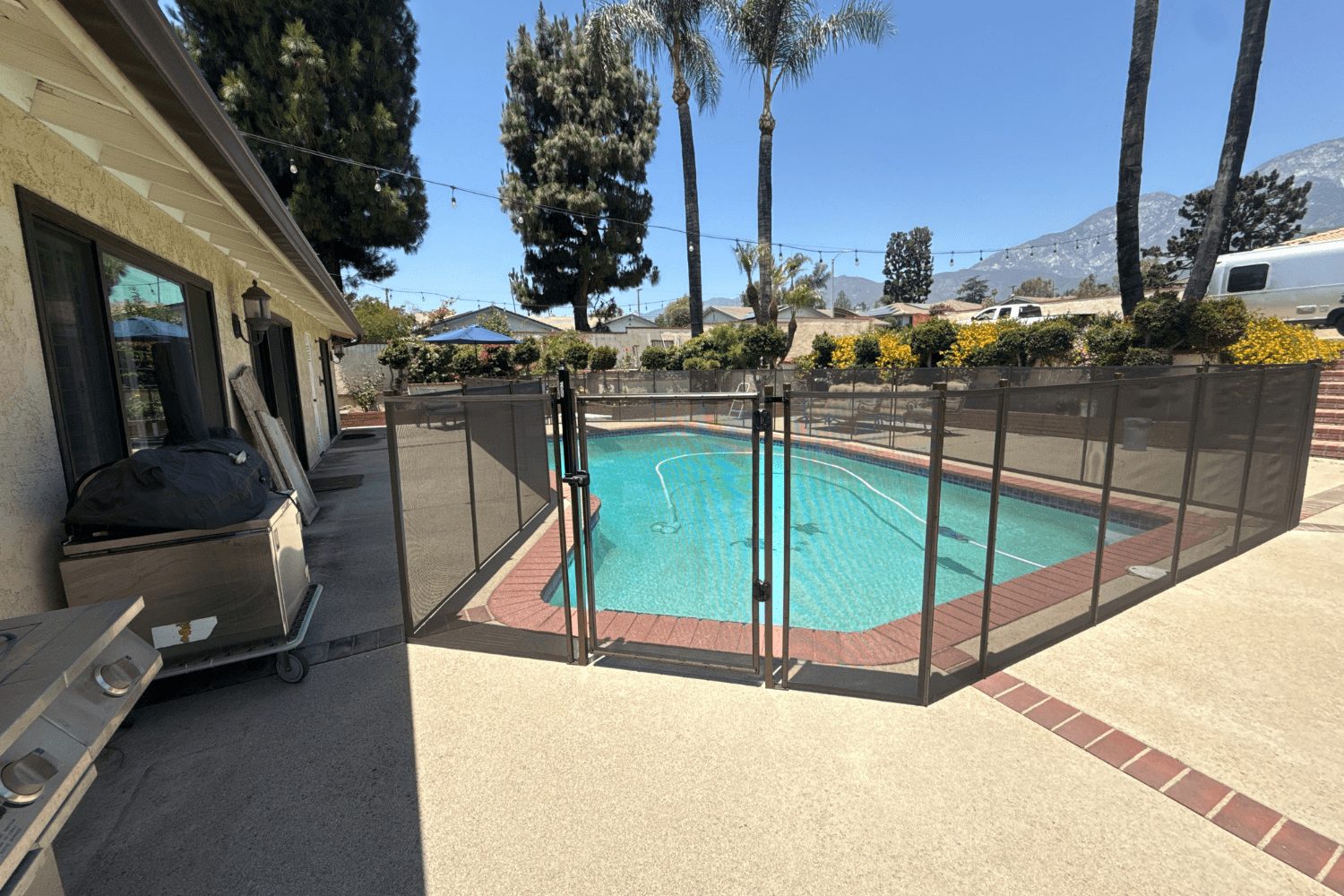
The pool fence gate is one of the most important parts of your pool safety system. Do not simply point to it and say, “It closes automatically.” Ask the caregiver to operate it.
During the walkthrough, have them:
Open the gate normally.
Let it close without pushing it shut.
Watch and listen for the latch to engage.
Check that it cannot be pushed back open from the outside.
Identify anything that could interfere with the swing path, such as furniture, a toy bin, or a planter.
Practice closing it after walking through while carrying a towel bag or other typical item.
This gives the caregiver a clear picture of the expected behavior: the gate should close and latch every time, without being propped open or “helped” with a chair, rock, or latch bypass.
Four-sided isolation fencing with a self-closing, self-latching gate is a key barrier recommendation for home pools. The American Red Cross notes that this type of fence separates the pool from the house and yard, while CPSC guidance similarly emphasizes self-closing, self-latching gates as a layer of protection.
If the gate does not close or latch reliably during the walkthrough, do not treat it as a caregiver problem. Treat it as a repair issue that should be addressed before leaving someone else in charge.
Explain What “Pool Closed” Means in Your Home
“Pool closed” means different things to different families. Some mean no one is swimming. Others mean the gate is shut but the toys are still floating in the water. For a caregiver, vague language can create gaps.
Give them a simple, specific definition of what pool closed looks like at your home.
For example:
The pool gate is fully closed and latched.
Door and gate alarms are armed or active, if you use them.
No chairs, toys, or storage items are against the fence.
The pool safety net or cover is in place when your family uses one.
Pool toys are put away so children are not drawn toward the water.
Children do not enter the pool area unless an adult has intentionally started supervised swim time.
You do not need a complicated policy. You need one routine that a caregiver can understand, repeat, and follow.
This is where All-Safe®’s layers of protection work together. A pool fence limits access to the area; a safety net or cover can provide an additional barrier over the water when it is not in use; alarms add an alert if access occurs; and a clear routine makes sure the human part of the system is not left to guesswork.
Define When Swimming Is Actually Allowed
Before you leave, be clear about whether swimming is allowed while the caregiver is in charge, and under what conditions.
Rather than saying “Use your best judgment,” give a direct answer:
Is swimming allowed today?
Which children may swim?
What are each child’s current swimming abilities?
Does an adult need to be in the water, at the edge, or within arm’s reach?
Are flotation devices required for any child?
Are there pool features, such as deep ends, diving areas, drains, slides, or spas, that need special attention?
What weather, time of day, or behavior means swim time ends?
If swimming is permitted, designate the caregiver as the active water watcher. This is not the same as being generally present in the backyard. The water watcher’s only job is monitoring the children in or near the water without phone use, chores, reading, or social distractions.
If the caregiver needs to answer the door, make food, take a call, use the restroom, or attend to another child, the swim session ends first. Children leave the water, and the pool returns to your household’s “closed” routine until direct supervision can resume.
Show the Equipment They May Need in an Emergency
A caregiver should not have to search through a garage or scroll through their phone to find essentials in an emergency.
During the walkthrough, point out:
A phone that can call 911 and the full address of the property.
Rescue equipment, such as a reaching pole or ring buoy, if available.
The first-aid kit.
Any pool alarm controls or shutoff information you want them to know.
The location of life jackets or approved flotation devices.
The nearest safe exit or access point around the pool.
Emergency contacts, including you, another trusted adult, and the child’s doctor or allergy information when relevant.
Water-safety organizations consistently advise parents and caregivers to keep emergency communication available, know CPR, use appropriate barriers, and check the water first if a child is missing.
You do not need to turn every caregiver into a pool professional. You do need to make sure they can act quickly and confidently if something goes wrong.
Ask Them to Show You the Plan Back
The most important part of the handoff is not what you tell a caregiver, it is what they can repeat and demonstrate.
Before you leave, ask a few simple questions:
“Show me which gate you would use to enter the pool area.”
“What should the gate do after you walk through it?”
“If the kids want to swim, what happens first?”
“What does ‘pool closed’ mean here?”
“Where is the phone and what is our address?”
“If you cannot find a child, where do you check first?”
“What would you do if the gate does not latch or an alarm goes off?”
This is not a test meant to make someone nervous. It is a quick way to discover misunderstandings while you are still there to clarify them.
If a caregiver is unsure about operating the gate, using a net or cover, managing the alarm, or supervising swimmers, adjust the plan. That may mean deciding swimming is not allowed while you are gone, providing additional instruction, or choosing another caregiver for pool days.
Make the Walkthrough a Habit, Not a One-Time Event
A caregiver handoff should happen whenever the situation changes, not only the first time someone babysits.
Repeat the walkthrough when:
A new babysitter, nanny, grandparent, neighbor, or houseguest will be in charge.
You move, remodel the yard, add a pool feature, or change the fence/gate setup.
You install a safety net, cover, alarm, or other new product.
A child develops new mobility or swimming skills.
Your regular caregiver has not been at your home in a while.
The pool changes from active use to a fall transition or winter-closed routine.
A pool safety system works best when everyone responsible for children understands how its layers work together. A few minutes of preparation before you leave can help make the caregiver feel more confident and your backyard more predictable.
At All-Safe®, we believe pool safety should be clear, practical, and built into everyday life. Start with a reliable pool fence and self-closing gate, add the appropriate layers for your home, and make sure every adult in charge knows how to use the system, not just that it exists.
A sliding deck pool cover does more than protect the water. When closed, it can conceal the pool and turn its footprint into usable outdoor space for relaxing, entertaining, and everyday backyard living. Learn whether this custom solution may be right for your pool project.
A winter cover protects the water, but a pool fence controls access to the entire pool area. Learn why removable mesh fencing can still play an important role after your pool is closed, and when seasonal removal may make sense.
“Covered” can mean very different things for your pool and backyard. Learn how safety nets, leaf covers, winter safety covers, automatic covers, and sliding deck systems affect access, safety, maintenance, and how you can use the space around, and above, your pool.